
A Practical Guide to Reducing IT Carbon Tax Liability Across Enterprise Fleets
How endpoint power visibility and control turn a rising compliance cost into a manageable, budget-friendly operating line.
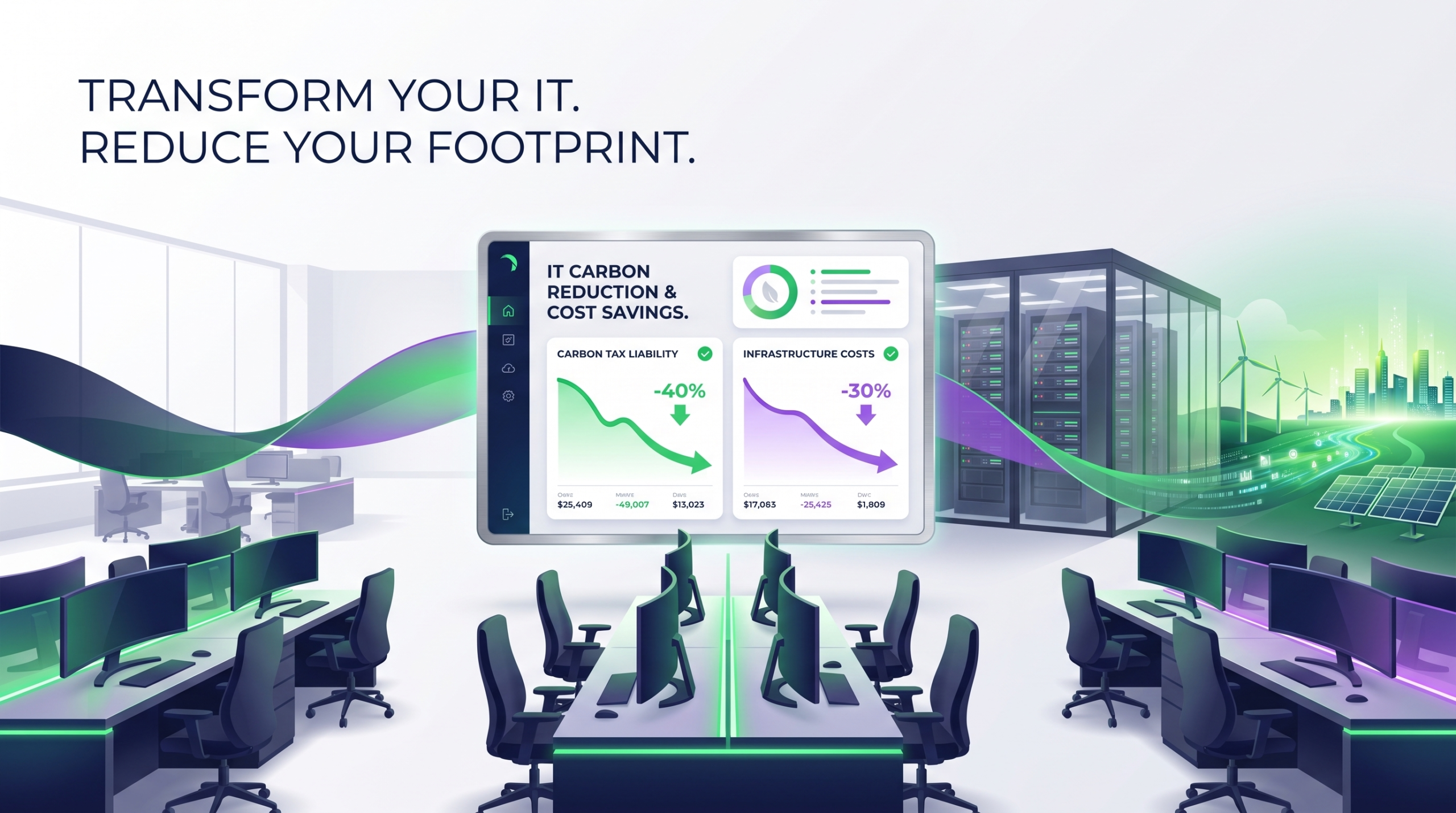
As governments expand carbon reporting and taxation frameworks to cover corporate energy consumption, IT infrastructure — long treated as a fixed cost — is becoming a visible line item on sustainability ledgers. Reducing IT carbon tax liability now depends less on procurement decisions and more on how efficiently the existing fleet of desktops, laptops, and monitors is actually managed day to day.
Article NavigationTable of Contents
Why IT Carbon Tax Liability Is Rising
Carbon-related levies were historically aimed at heavy industry, but reporting obligations are steadily widening to include the energy consumption of corporate office and data infrastructure. For most enterprises, IT hardware — thousands of desktops, laptops, monitors, and peripheral devices — runs around the clock whether it is being actively used or not, and that continuous draw is exactly the kind of consumption regulators are starting to measure.
The result is that reducing IT carbon tax liability is no longer a theoretical sustainability goal; it is becoming a line item finance and IT leaders are expected to actively manage, alongside more familiar concerns like licensing costs and hardware refresh cycles.
- Expanding scope of energy and emissions reporting requirements for large employers.
- Growing scrutiny of “always-on” device behavior across distributed and hybrid workforces.
- Increased pressure on IT and finance teams to justify infrastructure energy spend with data.
Endpoint Power Management: The Quickest Path to Measurable Savings
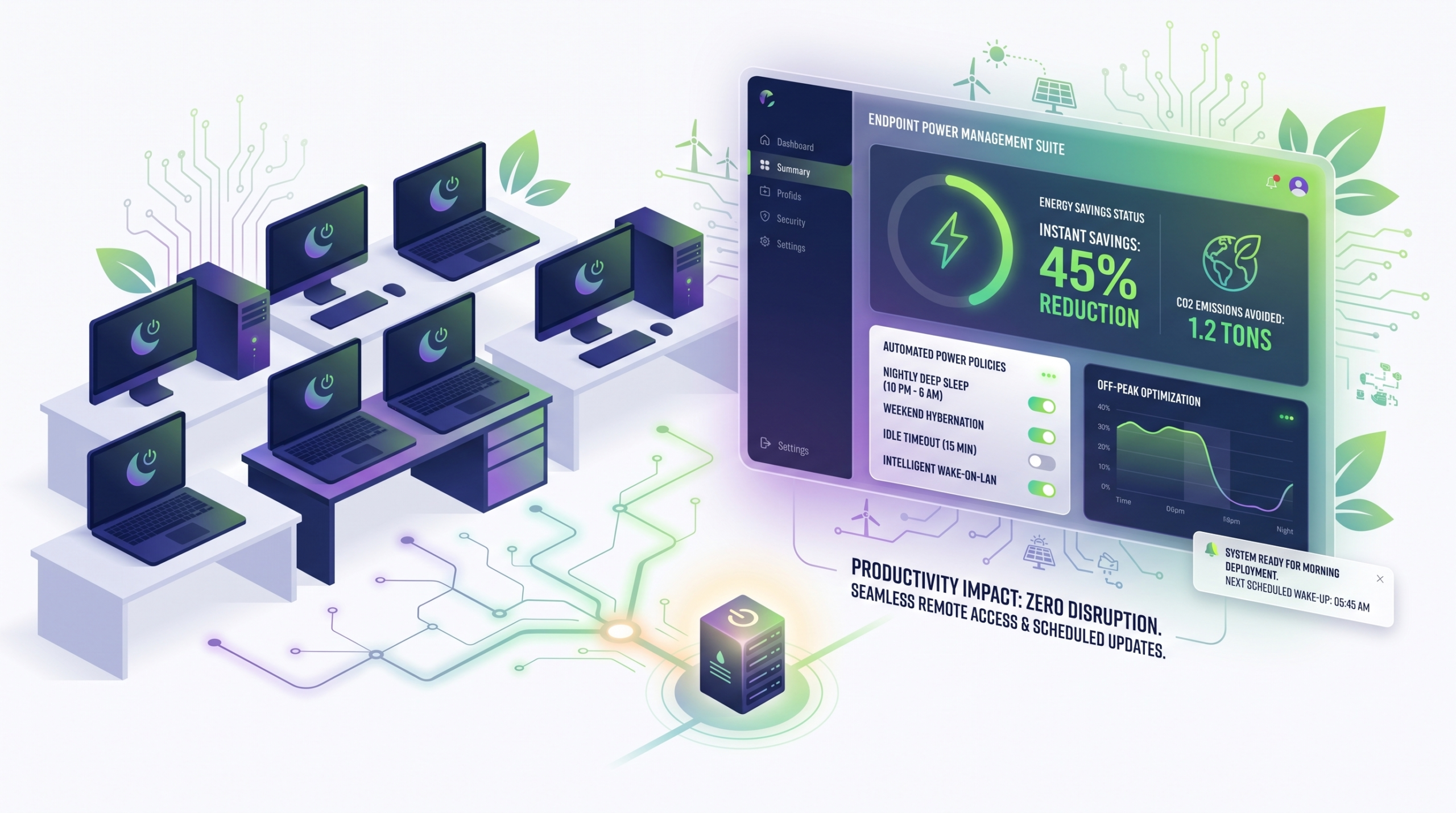
Before investing in new hardware or complex reporting systems, most organizations already have an underused lever sitting on every desk: the power settings of the devices themselves. Idle screens, sleep delays that never trigger, and machines left fully powered overnight quietly add up across thousands of endpoints.
Centralized endpoint power management gives IT teams a way to standardize sleep, shutdown, and wake policies fleet-wide, rather than relying on inconsistent local settings that vary by device, department, and user habit. This is typically the fastest and most controllable step toward reducing IT carbon tax liability, because it acts directly on consumption rather than waiting on downstream reporting.
| Approach | Typical Result | Effort to Implement |
|---|---|---|
| Manual, per-device settings | Inconsistent, hard to audit | High — relies on user behavior |
| Centralized power policy management | Consistent reduction across the fleet | Low — configured and monitored centrally |
| Hardware replacement alone | Improves efficiency per device, not usage patterns | High — capital and lead-time intensive |
See Fleet-Wide Power Waste in One View
PowerPlug helps IT teams surface idle and always-on endpoints, apply consistent power policies, and track the impact over time — without disrupting users.
See the PlatformA Common Mistake: Chasing Reports Before Fixing Waste
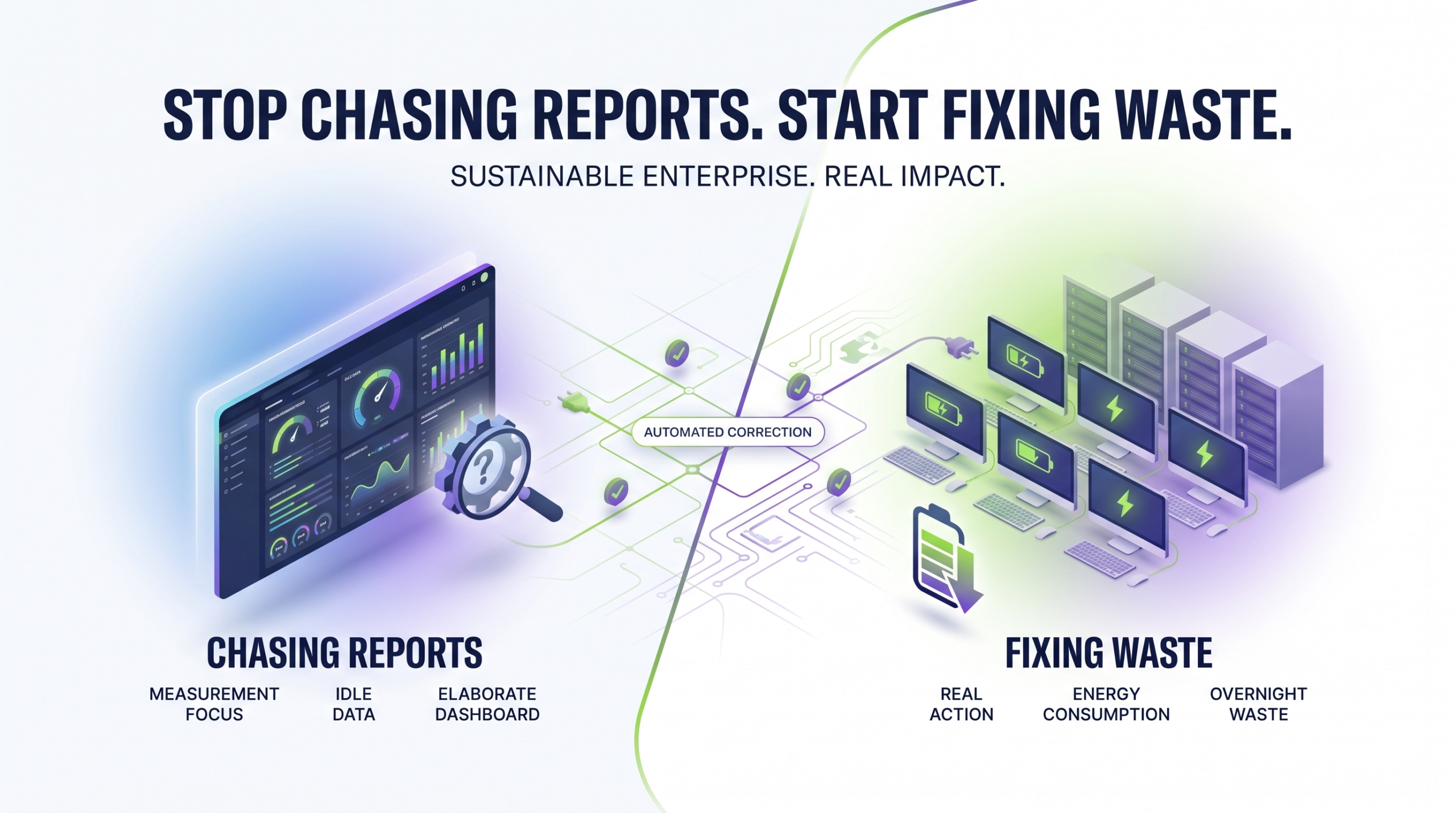
A frequent misstep is prioritizing carbon reporting infrastructure before addressing the underlying energy waste it is meant to describe. Building dashboards and audit trails around consumption patterns that haven’t been optimized simply documents the problem more precisely — it doesn’t reduce exposure.
A more effective sequence starts with fixing controllable waste at the endpoint level first, then layering reporting and forecasting on top of a cleaner baseline. This order matters directly for reducing IT carbon tax liability, since tax and levy calculations are typically based on actual measured or estimated consumption, not intent.
Building a Durable Reduction Strategy
Sustained progress comes from combining consistent policy enforcement with ongoing visibility, rather than a one-time cleanup. A durable approach generally includes the following elements, applied across the full device fleet rather than isolated pockets of the organization.
Core Components of a Working Strategy
- Standardized sleep, shutdown, and display power policies applied consistently across departments.
- Ongoing visibility into which devices remain active outside of working hours.
- Regular review cycles so policies stay aligned as the device fleet and work patterns change.
- Clear internal ownership between IT operations and sustainability or finance stakeholders.
Framed this way, reducing IT carbon tax liability becomes an operational discipline — similar to patch management or asset tracking — rather than a separate compliance project bolted onto existing IT workflows.
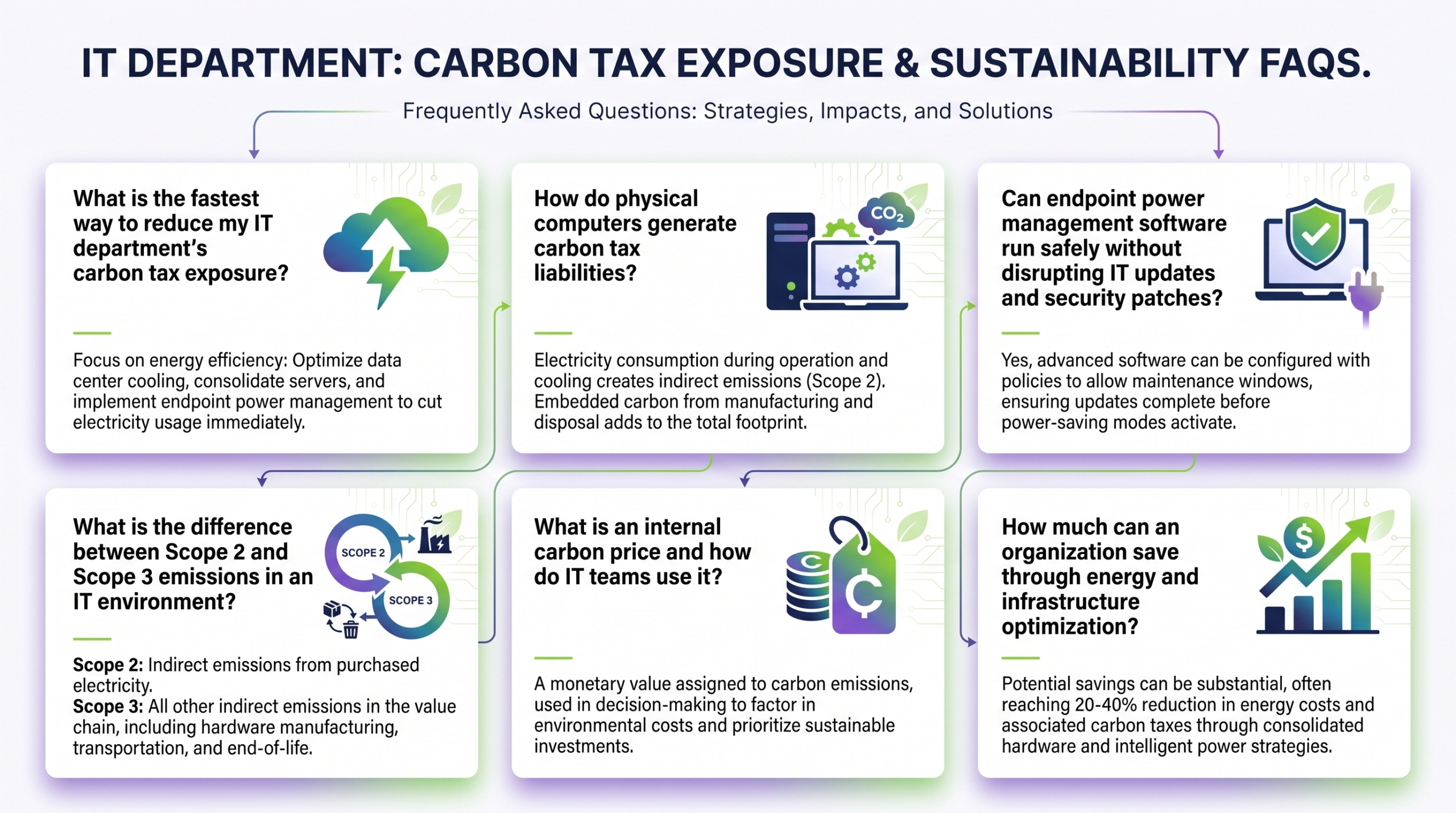
Why does endpoint power management matter for carbon tax exposure?
Endpoint devices often run continuously even when idle, and that ongoing energy draw contributes directly to the consumption figures used in carbon-related reporting and levies. Managing power behavior at the endpoint level reduces that consumption at the source.
Should reporting or waste reduction come first?
Waste reduction should generally come first, or at least run in parallel. Reporting on unoptimized consumption only documents the problem — it doesn’t lower the underlying exposure that reporting is meant to track.
Is this only relevant for very large enterprises?
Any organization managing a meaningful fleet of PCs and laptops can benefit from consistent power policies, since the underlying issue — devices left active outside of active use — scales with the number of endpoints, not just company size.
Does this replace the need for hardware upgrades?
No. Power management addresses usage patterns and waste, while hardware efficiency addresses the device itself. The two are complementary, but power management is typically faster and lower-cost to implement first.
Ready to Reduce IT Carbon Tax Liability Across Your Fleet?
PowerPlug gives IT and sustainability teams a single, centralized view of endpoint power behavior — so waste reduction and reporting are built on the same accurate data.
Talk to Our TeamPC Power Management for Enterprise Operations
PowerPlug helps IT teams monitor, standardize, and enforce power policies across enterprise PC fleets — turning scattered device settings into a single, centrally managed layer that supports both cost control and sustainability reporting.