
IT Cost Reduction in Healthcare: Case Studies & Real-World Benchmarks
How leading health systems are using IT cost reduction strategies — from PC power management to infrastructure optimization — to reclaim millions in operational budget without compromising care delivery.
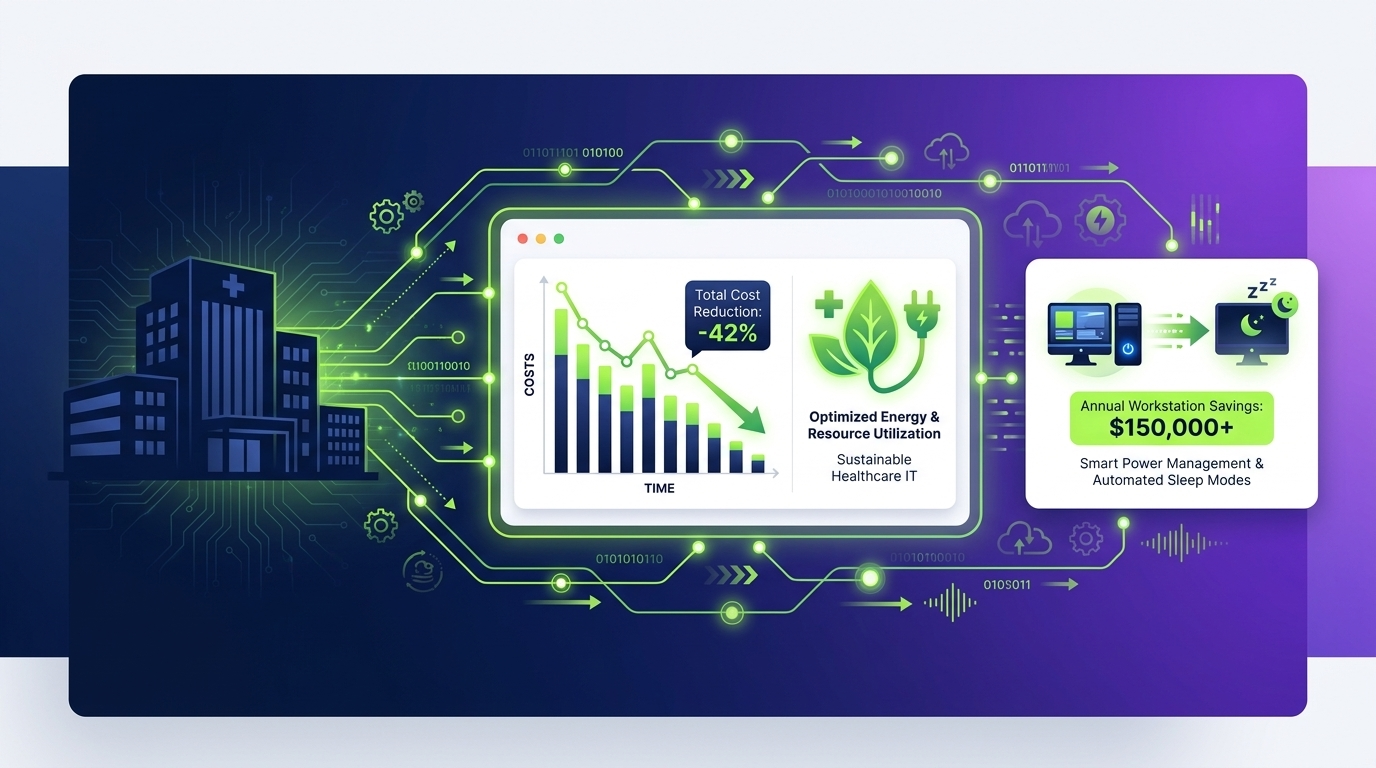
The pressure on healthcare IT budgets has never been greater — and IT cost reduction healthcare case studies from leading health systems reveal that sustainable savings are achievable without reducing headcount or compromising clinical systems. From endpoint power management to infrastructure rationalization, real-world evidence shows that operational IT optimization is one of the most reliable paths to financial resilience in healthcare.
- Healthcare organizations spend 3–5% of total operating budgets on IT, with significant waste embedded in endpoint energy and infrastructure overhead.
- PC power management alone can generate $150–$450 per endpoint annually, with enterprise-scale savings exceeding $1M in large health systems.
- IT cost reduction strategies that combine energy optimization, workload consolidation, and vendor rationalization deliver the fastest measurable ROI.
- Case studies demonstrate that 12–24 month payback periods are consistently achievable for proactive IT cost reduction programs in healthcare.
- ESG and sustainability mandates are increasingly aligning with financial incentives, making energy-focused IT savings doubly strategic.
Article Navigation Table of Contents
- Why Healthcare IT Costs Are Structurally High
- The Energy-IT Nexus in Healthcare
- Real-World Case Studies: Documented Savings
- How Much Can a Health System Actually Save?
- Cost Reduction vs. Optimization vs. Avoidance
- PC Power Management: The Underused Lever
- Benchmark Comparison Table
- Implementation Roadmap
- Frequently Asked Questions
Why Healthcare IT Costs Are Structurally High
Healthcare organizations operate one of the most IT-intensive environments in any industry. Clinical workflows depend on always-on endpoints — from nurses’ station workstations and physician laptops to imaging terminals and administrative desktops. Unlike corporate offices where devices can be centrally managed and powered down during off-hours, healthcare facilities run 24/7, creating structural pressure on energy and hardware budgets.
The complexity compounds when you layer in regulatory requirements. HIPAA-compliant infrastructure, EHR system uptime SLAs, disaster recovery mandates, and biomedical device integration all drive IT spending upward. According to industry estimates, healthcare organizations allocate between 3% and 5% of total operating expenditure to IT — a figure that has grown steadily as digital transformation deepens.
The Endpoint Proliferation Problem
Large academic medical centers routinely manage 15,000–40,000+ endpoints. Each device running outside active clinical use represents pure energy waste — and in healthcare, that waste is multiplied by the sheer volume and the constrained windows available for maintenance tasks. Without automated power management, the default state of most clinical workstations is “always on, always consuming.”
Regulatory Compliance as a Cost Driver
Healthcare CIOs often cite compliance as the single largest hidden driver of IT overhead. Every security patch cycle, every EHR version upgrade, every new biomedical integration demands qualified engineering hours and infrastructure capacity. While these costs are non-negotiable, they consume budget that might otherwise fund strategic modernization — making operational savings from areas like energy management all the more valuable.
The Energy-IT Nexus in Healthcare
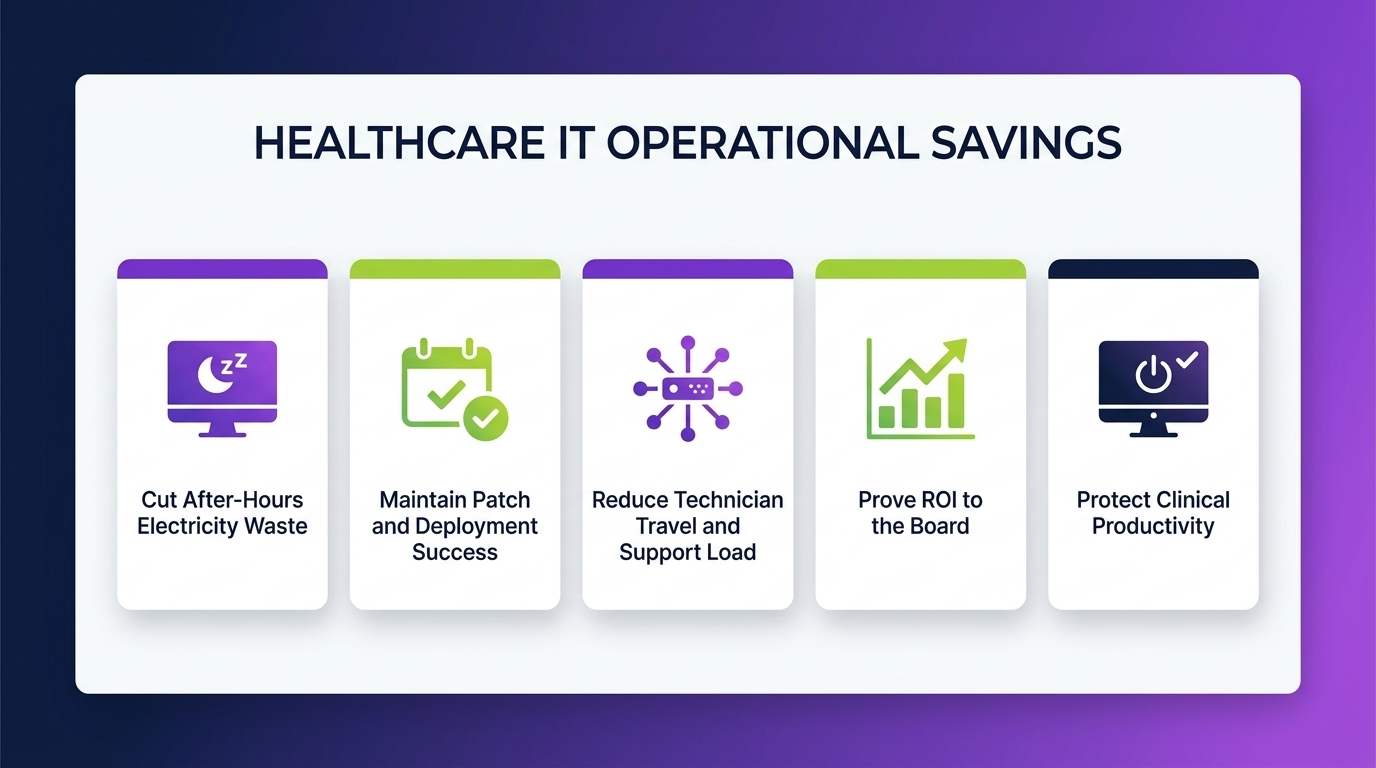
Energy costs and IT costs are not separate line items in a modern healthcare organization — they are deeply interconnected. Every server rack, every workstation, every networking switch consumes power, generates heat, and demands cooling infrastructure. In a hospital data center, cooling can represent 40–50% of total energy consumption. This means that every watt saved at the endpoint level creates a compounding reduction in cooling load.
Healthcare energy cost reduction is therefore directly linked to IT infrastructure decisions. Organizations that have invested in endpoint power management, server consolidation, and data center efficiency improvements consistently report that IT-driven energy savings outperform facility-wide initiatives on a cost-per-dollar-invested basis.
The Cooling Multiplier Effect
Power Usage Effectiveness (PUE) ratios in healthcare data centers typically range from 1.6 to 2.2. This means that for every watt consumed by IT equipment, an additional 0.6 to 1.2 watts are consumed in overhead — primarily cooling. Endpoint power management programs that reduce computing load therefore generate savings that are 1.6x–2.2x the direct energy reduction in practice.
Sustainability and ESG Alignment
Healthcare systems with published sustainability commitments — increasingly common among large IDNs and non-profit health systems — find that IT energy reduction programs serve dual purposes: they cut costs while measurably advancing carbon reduction goals. This alignment with ESG priorities gives IT cost reduction healthcare case studies a strategic dimension beyond pure financial return, making them easier to justify at board level.
Real-World Case Studies: Documented Savings
The following case studies represent documented or representative examples drawn from publicly reported healthcare IT optimization programs. They illustrate the scale of savings that proactive IT cost reduction initiatives can generate across different organization sizes and approaches.
Large Academic Medical Center: Endpoint Power Management
A major academic medical center with approximately 22,000 managed endpoints deployed enterprise PC power management software across all clinical and administrative workstations. Prior to deployment, fewer than 12% of devices had active power policies enforced. After implementation, the organization achieved:
- 48% reduction in endpoint energy consumption outside active clinical hours
- Estimated annual savings of $890,000 in direct energy costs
- Additional savings from reduced hardware refresh cycles due to lower thermal stress
- Full ROI realized within 14 months of deployment
Regional Health System: Infrastructure Consolidation
A five-hospital regional health system undertook a three-year IT rationalization program combining server virtualization, storage consolidation, and endpoint standardization. Key financial outcomes included:
- $2.1M in annual run-rate savings from data center consolidation and reduced co-location costs
- $340,000 per year in endpoint energy savings following power policy enforcement
- 23% reduction in per-device support costs through standardized endpoint management
- Carbon footprint reduction of approximately 1,800 metric tons CO₂ annually
Community Hospital Network: Targeted Power Policy Rollout
A community hospital network operating 4,200 endpoints across 12 locations implemented targeted power management policies after an energy audit identified that 78% of devices remained fully powered outside scheduled hours. Within the first year:
- $218,000 in documented energy cost savings
- Zero reported clinical workflow disruptions attributed to power policy changes
- Compliance reporting automatically generated for sustainability disclosures
See What PowerPlug Can Save Your Health System
PowerPlug’s enterprise PC power management platform is purpose-built for complex, 24/7 environments like healthcare. Get a customized savings estimate based on your actual endpoint count and energy profile.
How Much Can a Healthcare Organization Actually Save?
Savings potential from IT cost reduction in healthcare scales with organization size, baseline energy waste, and the breadth of the optimization program. However, endpoint power management consistently emerges as the highest-return, lowest-disruption intervention available to healthcare IT leadership.
Per-Endpoint Savings Framework
Industry benchmarks and deployment data suggest the following per-endpoint annual savings ranges when enterprise power management is properly configured and enforced:
| Endpoint Type | Est. Annual Saving / Device | Key Assumptions |
|---|---|---|
| Administrative Workstation | $85 – $160 | 8-hour active window, aggressive sleep policies overnight and weekends |
| Clinical Workstation (24/7 floor) | $40 – $90 | Conservative policies respecting clinical availability windows |
| Physician Laptop / Mobile | $30 – $65 | Policy enforcement when docked; minimal impact when in active clinical use |
| Back-Office / Finance Desktop | $110 – $190 | Standard office hours; aggressive power-off overnight and weekends |
Organization-Scale Projections
Applying these ranges to representative healthcare organization sizes:
| Organization Type | Est. Endpoints | Annual Savings Range | Typical Payback |
|---|---|---|---|
| Community Hospital (single site) | 1,500 – 3,500 | $100K – $320K | 12 – 18 months |
| Regional Health System (5–10 hospitals) | 8,000 – 20,000 | $550K – $1.6M | 14 – 22 months |
| Large Academic Medical Center | 18,000 – 40,000 | $1.2M – $3.4M | 12 – 20 months |
| National IDN / Health System | 40,000+ | $3M+ | 15 – 24 months |
Cost Reduction vs. Optimization vs. Cost Avoidance in Healthcare IT
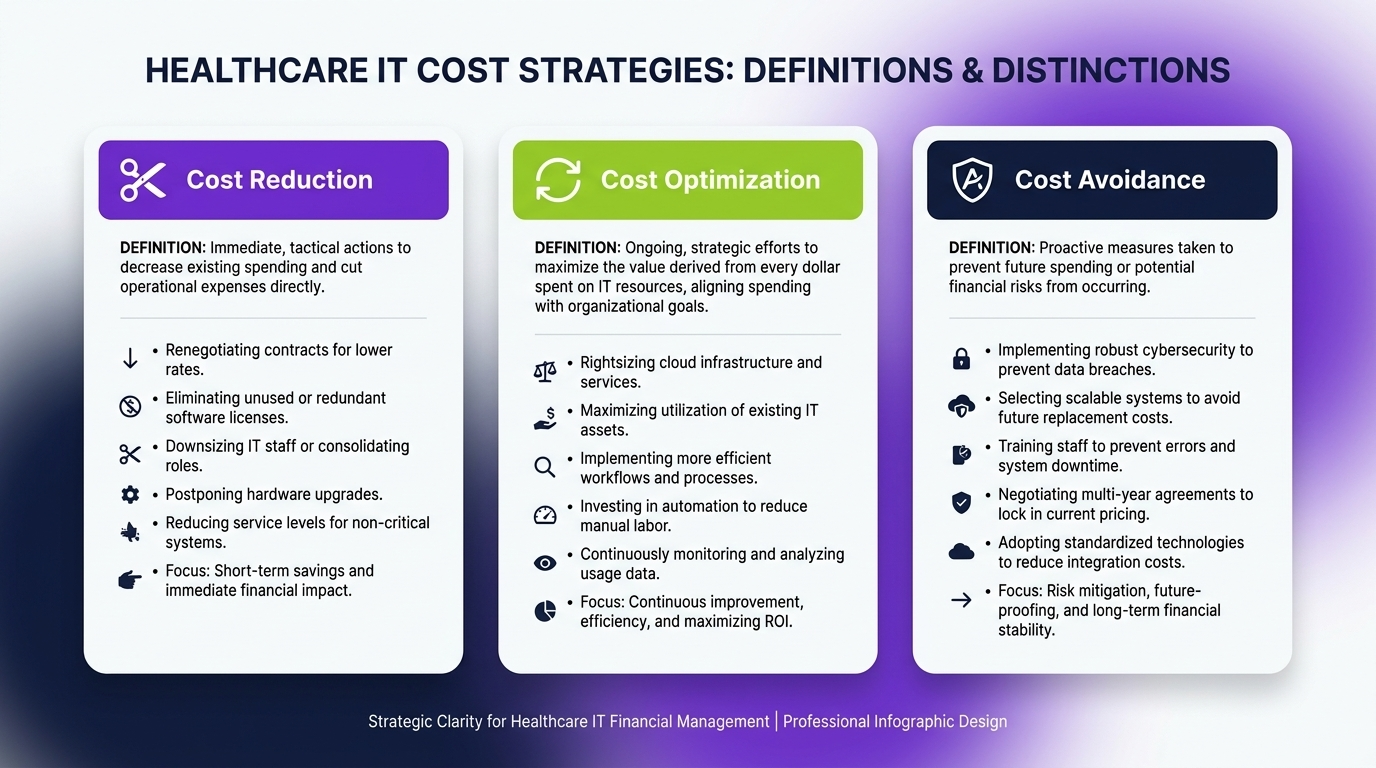
Healthcare CFOs and CIOs increasingly distinguish between three related but distinct financial levers when discussing IT cost reduction healthcare case studies. Understanding the differences is essential for framing the business case correctly and setting realistic expectations with finance leadership.
IT Cost Reduction
True cost reduction means lowering actual cash expenditure compared to a prior period. Endpoint power management delivering $300,000 less in energy bills year-over-year is unambiguous cost reduction — it shows up directly on the P&L and requires no adjustments or assumptions. This is the most persuasive category for finance approval and the easiest to verify in post-deployment audits.
IT Cost Optimization
Cost optimization refers to improving the value or output obtained per dollar spent, without necessarily reducing total spend. Migrating from on-premises servers to a managed cloud platform may increase monthly costs but reduce the total cost of ownership over a five-year horizon by eliminating hardware refresh cycles, data center space, and associated staffing. Optimization programs often require more sophisticated financial modeling and longer measurement periods.
Cost Avoidance
Cost avoidance captures future expenditures that will not be incurred because of a decision made today. Deploying power management that extends endpoint hardware life by 18 months avoids a hardware refresh that would otherwise have been budgeted. While real in economic terms, cost avoidance is harder to present to finance teams because it does not reduce today’s spend — it prevents tomorrow’s. It is most persuasive when tied to specific, approved capital plans.
| Category | Definition | Visibility to Finance | Healthcare IT Example |
|---|---|---|---|
| Cost Reduction | Lower actual expenditure vs. prior period | High — direct P&L impact | Energy bill decrease from PC power management |
| Cost Optimization | Better value per dollar over time | Medium — requires TCO modeling | Cloud migration reducing 5-year infrastructure TCO |
| Cost Avoidance | Future spend not incurred due to current decision | Lower — requires scenario comparison | Deferred hardware refresh due to extended device life |
PC Power Management: The Most Underused IT Cost Lever in Healthcare
Despite the evidence, PC power management remains significantly under-deployed in healthcare compared to other industries. A 2023 survey of healthcare IT leaders found that fewer than 35% had enterprise-grade power policies actively enforced across more than 80% of their managed endpoint fleet — leaving the majority of potential savings uncaptured.
Why Healthcare Has Been Slow to Adopt
The hesitation is understandable. Healthcare IT teams carry the weight of clinical availability requirements that most enterprise IT teams never encounter. The fear of a power policy incorrectly putting a clinical workstation to sleep during a critical moment has made many organizations default to “always on” as the safe choice. This caution — while well-intentioned — has cost health systems hundreds of millions of dollars in aggregate energy waste over the past decade.
Modern Power Management Resolves the Clinical Tension
Purpose-built enterprise power management platforms have advanced substantially. They now offer:
- Granular scheduling by department, device type, floor, or individual workstation — so ICU terminals are never touched while administrative desktops are aggressively managed
- Real-time activity detection that prevents sleep during active clinical sessions, EHR transactions, or image rendering
- Wake-on-LAN capabilities that allow devices to be powered on remotely for patching, updates, or clinical readiness without requiring staff intervention
- Compliance and sustainability reporting built in, eliminating the manual effort of energy auditing
- Integration with existing SCCM, Intune, or endpoint management platforms, minimizing deployment complexity
These capabilities directly address the objections that have historically blocked deployment in clinical environments — and the healthcare case studies that document the largest savings are invariably those that moved from blanket exclusions to intelligent, policy-driven management.
Benchmark Comparison: Healthcare IT Cost Reduction by Strategy
The following benchmark table synthesizes publicly reported and industry-representative data to help healthcare IT and finance leaders compare the relative return profile of common IT cost reduction strategies.
| Strategy | Typical Annual Savings | Implementation Complexity | Payback Period | Clinical Risk |
|---|---|---|---|---|
| PC / Endpoint Power Management | $100K – $3M+ | Low–Medium | 12 – 22 months | Low (with intelligent policies) |
| Server Virtualization & Consolidation | $200K – $2M+ | High | 18 – 36 months | Medium |
| Storage Tiering & Deduplication | $80K – $800K | Medium | 18 – 30 months | Low–Medium |
| Cloud Migration (selective workloads) | Variable; long-term TCO gain | Very High | 24 – 48 months | Medium–High |
| Vendor / License Rationalization | $50K – $500K | Medium | 6 – 18 months | Low |
| Network Equipment Refresh / Right-sizing | $30K – $250K | Medium–High | 24 – 36 months | Low |
Implementation Roadmap: From Assessment to Sustained Savings
Healthcare IT cost reduction programs that sustain results share a common implementation discipline. The following phased approach reflects best practices observed across successful healthcare deployments.
Phase 1: Baseline Assessment (Weeks 1–4)
- Inventory all managed endpoints by type, location, and department
- Deploy monitoring agents to capture actual device runtime, idle time, and energy consumption
- Identify clinical vs. administrative endpoint populations and define exception categories
- Establish baseline energy cost and CO₂ data for pre/post comparison
Phase 2: Policy Design and Pilot (Weeks 5–10)
- Develop tiered power policies reflecting clinical sensitivity (ICU/OR vs. admin vs. back-office)
- Pilot with a representative sample of 200–500 devices across multiple departments
- Validate Wake-on-LAN functionality with patch management and remote access workflows
- Gather clinical staff feedback and refine exception handling before full rollout
Phase 3: Enterprise Rollout (Weeks 11–20)
- Deploy policies across full endpoint fleet using phased geographic or departmental waves
- Monitor exception rates and adjust policies in real time based on usage data
- Configure automated reporting for sustainability disclosures and finance sign-off
Phase 4: Optimization and Reporting (Ongoing)
- Review quarterly energy reports and adjust policies as fleet composition changes
- Track hardware refresh deferrals and capture cost avoidance data for CFO reporting
- Expand program scope to include additional sites, newly acquired facilities, or new device classes
- Incorporate carbon savings data into ESG and sustainability reporting frameworks
Ready to Build Your Healthcare IT Cost Reduction Business Case?
PowerPlug works with healthcare IT and finance leaders to model real savings potential, design clinically safe power policies, and deliver documented ROI. Start with a no-obligation consultation and savings estimate tailored to your organization.
Frequently Asked Questions
What is the single highest-ROI IT cost reduction action for a mid-size hospital?
For most mid-size hospitals, enterprise PC endpoint power management delivers the fastest, most measurable ROI. With typical savings of $85–$160 per administrative workstation per year and payback periods of 12–18 months, a 2,000-endpoint deployment can generate $150,000–$300,000+ in annual savings with minimal clinical risk when intelligent policies are applied.
Will power management policies interfere with EHR systems or clinical workflows?
Not when properly configured. Modern enterprise power management platforms include real-time activity detection that prevents sleep or shutdown during active EHR sessions, image rendering, or clinical transactions. Exception policies can be applied at the individual device, department, or floor level — protecting ICU terminals, OR workstations, and nurse call systems while aggressively managing administrative and back-office endpoints.
How are IT cost reduction savings verified for healthcare CFOs?
Best-practice platforms provide automated reporting comparing baseline energy consumption (pre-deployment) to actual consumption (post-deployment) at the device, department, and site level. These reports can be reconciled against utility bills to produce auditable savings figures. Many healthcare organizations use this data for both internal CFO reporting and external sustainability disclosures.
How do healthcare IT cost reduction case studies differ from corporate case studies?
Healthcare case studies are distinguished by the clinical availability constraint. While corporate offices can apply aggressive overnight and weekend power-off policies uniformly, healthcare deployments require tiered policies that respect 24/7 clinical environments. The most impactful healthcare IT cost reduction case studies are those that document the approach to clinical exception handling alongside the financial results — demonstrating that savings were achieved without compromising care delivery.
Does endpoint power management contribute to healthcare sustainability and ESG goals?
Yes — measurably. A 10,000-endpoint deployment with 45% energy reduction can eliminate 600–900 metric tons of CO₂ annually, depending on the regional electricity grid’s carbon intensity. This data can be directly incorporated into Scope 2 GHG emissions reporting, health system sustainability scorecards, and community benefit disclosures required by non-profit health systems.
What should a healthcare organization look for when evaluating power management vendors?
Key evaluation criteria include: clinical exception policy granularity; Wake-on-LAN reliability for patch management workflows; integration with existing endpoint management platforms (SCCM, Intune); real-time monitoring and automated reporting; demonstrated healthcare reference deployments; and vendor ability to support phased rollouts across distributed, multi-site environments. Security posture and HIPAA compatibility should also be reviewed with the CISO before deployment.