Reading time: 10 minutes
Wake-on-LAN has a reputation problem. Ask a security team about it and you will hear about broadcast tricks, forwarded ports, and machines that anyone on the segment could start. Much of that reputation is earned, because the naive ways of doing remote wake really are risky. The important point is that they are not the only ways.
Done properly, Wake-on-LAN is a governed, authenticated, auditable operation that a security review signs off on. The difference between the version that gets blocked and the version that gets approved is entirely in the design. This guide sets out the security principles that separate the two, so you can power machines down for the energy saving without opening a hole in the network to bring them back.
Why Wake-on-LAN worries security teams
The concern starts with how classic Wake-on-LAN behaves. The wake signal is a broadcast frame that any device on the subnet can send, and in its raw form there is no authentication attached to it. A machine’s network card starts the board when it sees its own address in a wake packet, and it does not ask who sent that packet or why.
On a small trusted network that is harmless. In an enterprise it raises real questions. Who can start machines, when, and from where? What happens if someone tries to reach the wake mechanism from outside the building? The moment people try to answer the second question with port forwarding or directed broadcast, they create exactly the exposure the security team feared. The answer is not to avoid remote wake, but to build it so those questions have good answers.
The short answer, and the principle behind it
Wake-on-LAN can be secure in an enterprise, and the principle that makes it so is simple to state. Keep the wake broadcast local to each segment, never expose it to the internet, and put an authenticated, logged control layer in front of the action. Everything else in this guide is an application of that one idea.
When those three things are true, waking a machine stops being a loose broadcast and becomes a governed operation. The person is authenticated, their rights are scoped, the action is recorded, and no new inbound path exists for an attacker to find. That is a design a security team can reason about, which is why it is the one that gets approved.
Never expose Wake-on-LAN to the internet
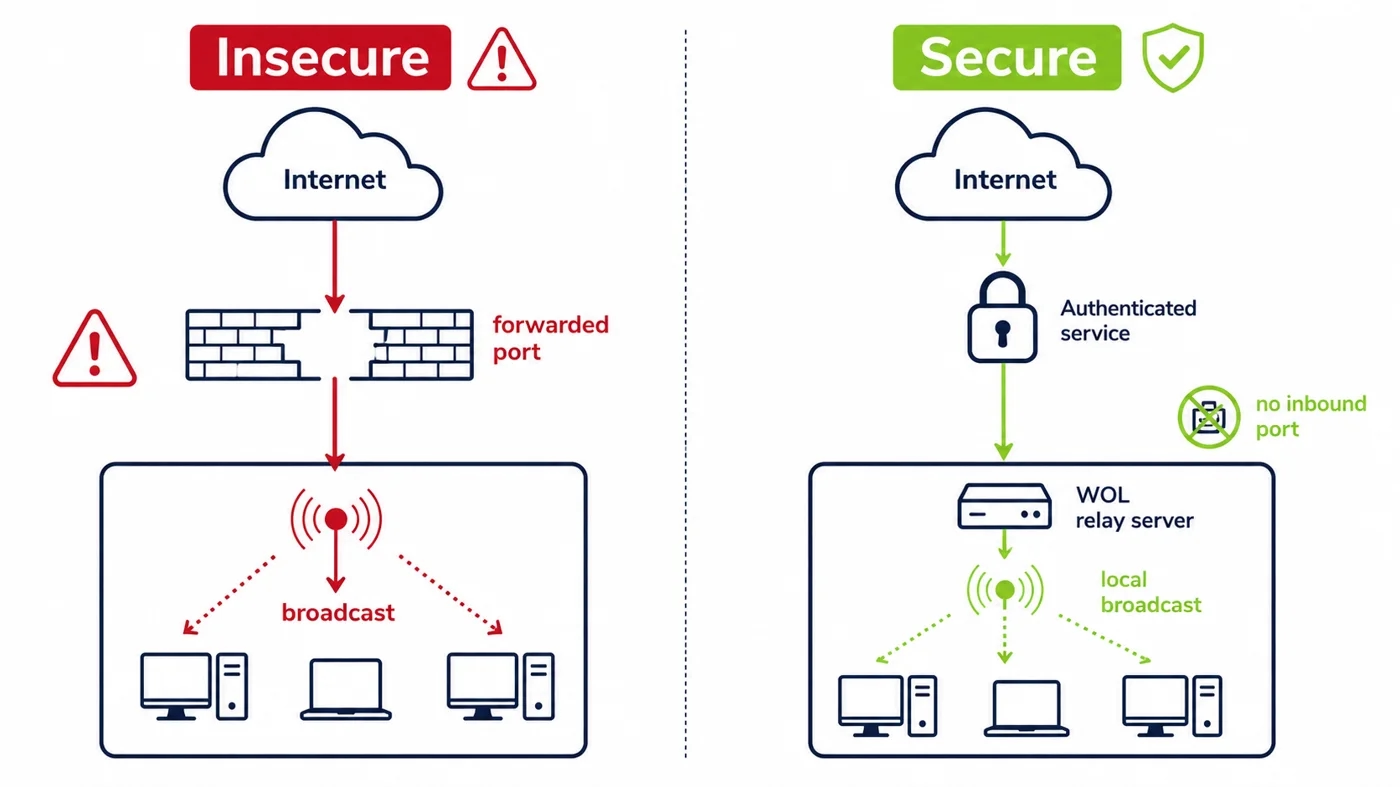
The single most important rule is that the wake mechanism should never be directly reachable from the internet. The naive way to wake a machine from home is to forward a UDP port through the firewall to the internal broadcast address, and it is exactly as dangerous as it sounds. It creates an unauthenticated, internet-facing path into the internal network whose only job is to start machines.
The secure alternative flips the direction. A remote request goes to an authenticated service, not to a forwarded port, and a component inside the network reaches out to that service rather than waiting for it to reach in. The remote person proves who they are, and the wake itself happens locally, inside the network, where it belongs. No inbound port is ever opened for wake traffic.
Why port forwarding for wake is the wrong answer
It is worth being specific about why the port-forwarding approach fails a review, because people reach for it so often. A forwarded wake port accepts packets from anyone on the internet, with no identity check, targeting the broadcast address of an internal segment. That is a permanent, anonymous, inbound entry point, and even if the only documented use is waking a PC, an exposed service is an exposed service.
Attackers scan for exactly these forgotten openings. The risk is not really that someone maliciously wakes your machines, it is that you have opened an unauthenticated inbound path and taught the network to trust broadcast from outside. A design that requires no inbound port avoids the whole category of problem rather than trying to mitigate it.
Keeping the broadcast inside its segment
Segmentation exists to contain traffic and risk, and a secure wake design has to respect it rather than punch holes in it. The broadcast-forwarding methods, directed broadcast and helper relays, work against this by pushing wake traffic across boundaries that segmentation is meant to hold. A local relay model keeps the broadcast inside each segment, so nothing crosses a boundary except a short authenticated command.
This matters to more than tidiness. When the wake path does not depend on loosening segmentation, the design is easier to audit and far easier to keep secure as the network grows. The same segmentation that protects everything else stays intact, and the wake function lives within it rather than around it. This aligns naturally with the identity-and-segmentation thinking behind modern NIST Zero Trust guidance.
Tying the wake action to identity
Authenticated Wake-on-LAN is the piece that turns a broadcast into a governed action. Rather than the wake being an anonymous packet, the request is authenticated against the organization’s existing identity provider before anything happens. The system knows who is asking, and it can decide whether that person is allowed to wake that machine.
This is what people mean by secure WoL in enterprise terms. The raw wake packet is still what ultimately starts the machine, but it is generated locally by a trusted component only after an authenticated, authorized request. The authentication and the broadcast are separated, so the sensitive decision happens in a place you control and the broadcast never leaves its segment.
Insecure and secure patterns, side by side
The distinction is easiest to see when the two patterns are placed together. The table contrasts them across the dimensions a security review cares about.
| Dimension | Port forward / directed broadcast | Authenticated service with local relay |
|---|---|---|
| Internet-facing entry point | Yes, unauthenticated | None, outbound only |
| Who can wake a machine | Anyone who reaches the port | Authenticated, authorized users |
| Effect on segmentation | Weakens it | Preserves it |
| Audit trail | None | Every wake logged to a user |
Controlling who can wake what
Authentication answers who is asking, and authorization decides what they are allowed to do. In a secure design, each person is scoped to a defined set of machines, so a regular employee can wake only their own devices while a support role can wake a broader group. These rights map onto the roles the organization already uses, rather than being a separate list that drifts out of date.
Scoping the wake right this way contains the blast radius of any single compromised account. Even if an attacker took over one user, the only machines they could start are the ones that user was allowed to start, and every attempt would be recorded. Least privilege applied to a wake action is a small thing that pays off exactly when something has gone wrong.
Logging and auditing every wake
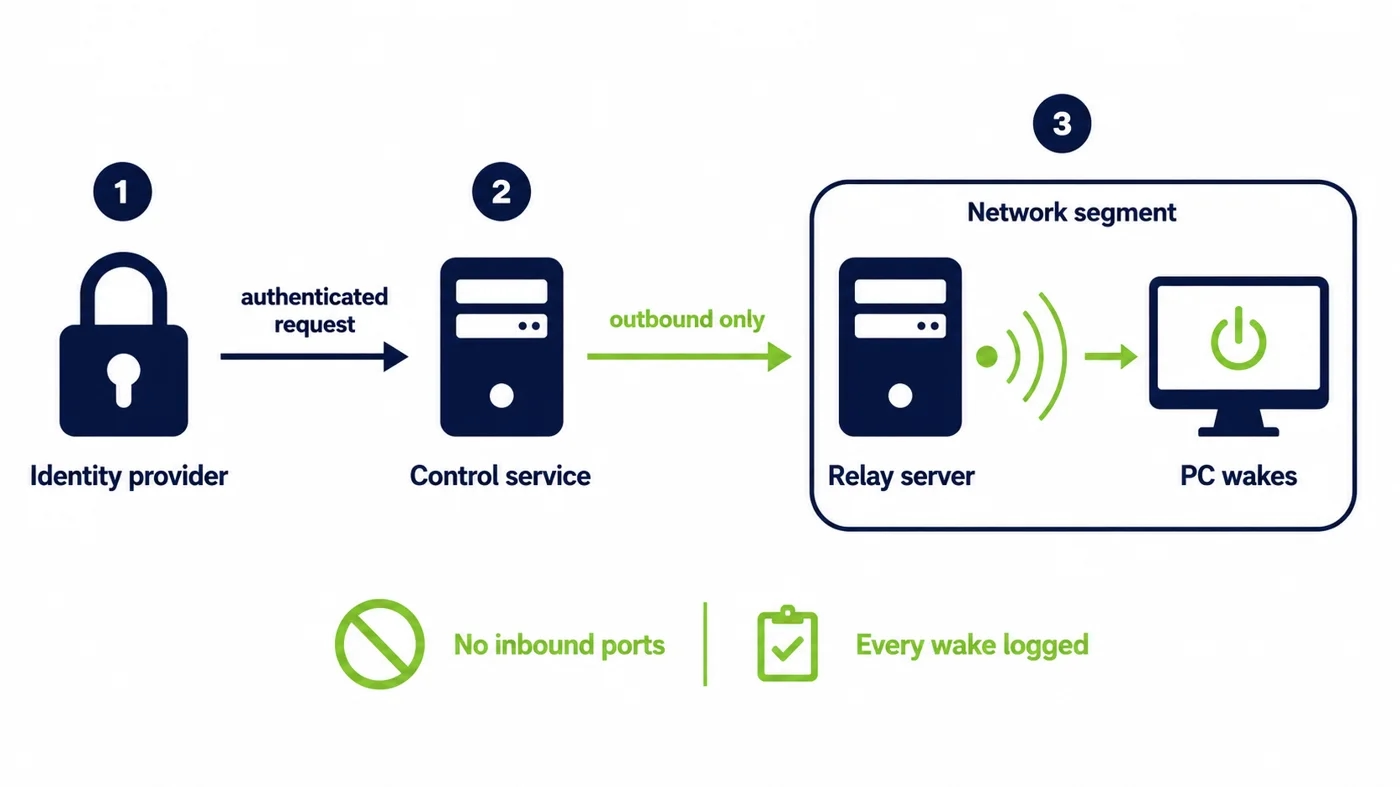
For anything that touches compliance, the record matters as much as the control. A secure wake system logs each request with the identity of the requester, the target machine, and the time, so there is an answer to the question of who woke a device and when. That log is the difference between a defensible operation and an unexplained one.
These logs also feed the wider monitoring the organization already runs. A sudden burst of wake requests, or wakes at an unusual hour, becomes a signal that can be reviewed like any other. What was an invisible broadcast in the old model becomes an event stream you can reason about, which is exactly what an auditor wants to see.
Living with 802.1X and network access control
Networks that enforce 802.1X or NAC add a wrinkle, because a machine that has just woken is not yet authenticated to the network and may land in a restricted state until it is. This does not make wake incompatible with access control, but it does mean the two have to be planned together rather than bolted on.
The practical approach is to let the machine wake, then let it complete its normal network authentication as it would after any boot, so it moves from the restricted state into full access on its own. A managed wake platform is aware of this sequence and confirms the machine actually reached a usable state, rather than declaring success the instant the packet was sent.
Endpoint settings that reduce risk
Security also lives on the endpoint. The network card should be set to wake only on a properly formed wake packet rather than on any traffic, which prevents stray activity from starting machines and keeps the wake behavior predictable. That single setting removes a lot of noise and a little risk at once.
The catch is that these settings drift. A firmware update, a new hardware model, or a fast-startup option can quietly change them across a batch of machines, leaving some that will not wake and others that wake too easily. A managed platform holds the intended endpoint state in place and reports where it has slipped, so the security posture is maintained rather than assumed.
When to use out-of-band management instead
Wake-on-LAN is the right tool for the large fleet of ordinary desktops, where its low cost and simplicity are exactly what you want. For a small number of critical systems that need full remote control regardless of power state, dedicated out-of-band management has its place, offering console access and deeper control at a higher cost per machine.
The two are complements, not competitors. Reserve out-of-band management for the handful of machines that genuinely need it, and use secure Wake-on-LAN for the thousands that just need to be woken reliably and safely. Matching the tool to the machine keeps both the cost and the risk sensible.
The most common misconfigurations
A few mistakes show up again and again. The first is the forwarded wake port left open to the internet, usually added for convenience and then forgotten. The second is directed broadcast enabled network-wide instead of scoped tightly, reopening a risk the network worked to close. The third is a wake mechanism with no authentication and no logging, so there is no way to say who did what.
Each of these is avoidable with the design principles above, and each is far easier to prevent than to unwind after an audit finds it. If you inherit an existing setup, these three are the first places to look, because they are where the real exposure usually hides.
A secure remote-wake reference architecture
Putting it together, the secure pattern looks the same in every enterprise. A remote request is authenticated against the identity provider. A component inside the network, connected outbound to the control service, receives an authorized instruction. That component emits the wake broadcast locally, inside the machine’s own segment, and confirms the machine came up. Every step is logged, and no inbound port is ever opened.
This is the architecture PowerPlug builds on, so an organization can power down idle machines for the energy saving and still wake them safely across a segmented network. The Wake-Up technology supplies the authenticated, segment-local wake, the wider platform is described on the platform overview, and it forms the core of PowerPlug’s enterprise Wake-on-LAN solution.
Where secure wake matters most
The organizations with the least room for a loose wake mechanism are the ones already under strict scrutiny. A hospital handling patient data, a bank under financial regulation, a government agency with a formal accreditation to maintain, and any enterprise mapping itself to a control framework all have to be able to say precisely who can do what and prove it after the fact. A wake mechanism that cannot answer those questions is a finding waiting to happen.
For these environments the authenticated, logged, segment-local design is not a nice-to-have, it is the only version that fits their obligations. The good news is that the same design that satisfies the auditor is also the one that is simplest to operate, because it removes the forwarded ports and broadcast exceptions that create both risk and fragility. Security and manageability point the same way here.
The security win is also the energy win
It is easy to treat wake security and energy saving as separate conversations, but they are two ends of the same decision. Organizations leave machines on overnight partly because the safe ways to wake them seemed too risky, so the fear of an insecure remote wake quietly keeps the energy waste in place. Remove that fear with a secure design, and the barrier to powering down disappears.
Once wake is something the security team trusts, the machines can be shut down every night with confidence, and the idle-PC energy that the US ENERGY STAR program has documented for years stops being spent. The secure architecture is what makes the saving safe to pursue, which is why the two goals are best solved together rather than traded off against each other.
Frequently asked questions
Is Wake-on-LAN secure in an enterprise?
It can be, when it is designed correctly. Keep the wake broadcast local to each segment, never expose it to the internet, and put an authenticated, logged control layer in front of the action. Built that way, waking a machine is a governed, auditable operation rather than a loose broadcast.
Can Wake-on-LAN be authenticated?
The raw wake packet has no authentication, but the action around it can. A secure system authenticates the request against your identity provider and authorizes it before a trusted local component generates the broadcast. The authentication and the broadcast are separated, so the sensitive decision happens where you control it.
Is it safe to forward a port so I can wake a PC from the internet?
No. Forwarding a wake port creates an unauthenticated, internet-facing entry point into the internal network, which is exactly the exposure to avoid. Use an authenticated service with a component that connects outbound instead, so the wake happens locally and no inbound port is ever opened.
Does 802.1X or NAC break Wake-on-LAN?
Not if they are planned together. A machine that has just woken completes its normal network authentication and moves from any restricted state into full access on its own. A managed platform is aware of this sequence and confirms the machine reached a usable state rather than assuming the wake alone was enough.
How do you audit who woke a machine?
A secure wake system logs every request with the requester’s identity, the target machine, and the time, and feeds those events into the monitoring you already run. That gives a clear answer to who woke a device and when, and lets unusual patterns be reviewed like any other security event.
See how much your organization could save
Tell us how many PCs you run and we will show you the realistic energy and cost savings, along with the payback period.
Talk to us