Entries by nimrody

How Much Do Idle Office PCs Really Cost You Every Year?

If your organization leaves hundreds or thousands of PCs on overnight, you’re wasting money every single day without realizing it.

The larger your environment, the more expensive this invisible habit becomes. In most companies, this happens every night without anyone actively tracking the cost.

It may seem harmless at first, but it isn’t.

Leaving computers running after hours creates a steady, silent expense that repeats itself daily. Over time, this adds up to thousands, and in many cases tens of thousands, of dollars each year without anyone noticing.

The Hidden Cost of “Doing Nothing”

A computer doesn’t stop consuming electricity just because no one is using it. Even when idle, it continues to draw power to keep systems running, memory active, and background processes alive.

One machine doesn’t seem like a problem. That’s where most organizations stop thinking.

But organizations don’t operate a single machine. They operate hundreds or thousands.

That’s when a small inefficiency turns into a real cost.

enterprise office with a computer running during work hours

Let’s Talk Numbers

Consider a realistic scenario.

An organization with 1,000 PCs, where each machine consumes between 60 and 100 watts while idle, which is typical for office environments. Even when not in use, these machines continue to draw a significant amount of power.

If those computers remain powered on for an additional 12 to 14 hours every night, the wasted energy quickly becomes substantial.

Now extend that across approximately 250 working days per year.

This is no longer a minor inefficiency. It becomes a consistent and predictable expense that reaches into the thousands of dollars annually. And that’s without factoring in weekends, holidays, or machines left running continuously.

This is not an extreme scenario. It reflects the default behavior in many organizations.

In practice, this often translates into tens of thousands of dollars wasted every year on machines doing absolutely nothing.

Why Does This Happen?

This situation doesn’t exist because companies ignore the problem. It exists because the process depends on people.

Employees forget to shut down their computers. Some leave them on intentionally for remote access. Others assume IT requires their machines to remain available.

From the IT perspective, shutting machines down can interfere with updates, maintenance, or remote troubleshooting. As a result, the safer option often becomes leaving everything running.

Individually, these decisions make sense. At scale, they create continuous waste.

The Real Impact Goes Beyond Cost

Electricity costs are only part of the picture.

When computers are left running unnecessarily, hardware continues operating without purpose, contributing to long-term wear. Office environments require more cooling to compensate for the heat generated by idle machines. At the same time, overall energy consumption increases, directly affecting an organization’s environmental footprint.

For companies with sustainability goals, this kind of unmanaged usage quietly works against them.

Why Manual Solutions Fail

Many organizations try to solve this problem with policies. They ask employees to shut down their computers at the end of the day or rely on reminders.

On paper, it sounds reasonable.

In practice, it doesn’t work.

Even a small percentage of employees not following the policy is enough to cancel out most of the expected savings. Over time, consistency breaks down, habits return, and the problem quietly comes back.

Manual behavior simply doesn’t scale in real-world environments.

it guy uses pc energy management dashboard

The Smarter Approach

Fixing this at scale requires removing the dependency on human behavior altogether.

A centralized PC energy management system gives organizations full control over when machines are active and when they are not, without relying on users to take action.

With automation in place, computers can shut down after working hours and become available again when needed through remote PC wake-up. This allows IT teams to run updates, maintenance, and remote access without keeping machines powered on unnecessarily.

Technologies like Wakeup Technology make it possible to balance availability and efficiency, ensuring systems are only powered on when there is a real reason for them to be.

In practice, this means organizations can significantly reduce unnecessary energy consumption without impacting productivity or IT operations.

What This Means for Your Business

When organizations take control of PC power usage, the impact is immediate.

Energy costs decrease because idle machines are no longer running through the night. IT teams gain confidence that devices are available when needed, without relying on users to leave them on. Employees no longer need to think about shutdowns or power settings at all.

The entire environment becomes more predictable, controlled, and efficient.

Conclusion

Leaving office PCs on overnight may seem like a small decision, but at scale, it creates a continuous and unnecessary cost.

This is not a complex problem. It’s simply one that has been ignored for too long.

Organizations that move to automated power management don’t just reduce energy consumption. They take control of their environment, lower operational costs, and eliminate a daily source of waste.

In other words, they stop losing money on machines that aren’t doing anything.
An idle PC typically consumes between 60 and 100 watts, depending on its hardware and configuration. Over extended periods, this consumption adds up significantly.

In most cases, no. Leaving computers on overnight results in unnecessary energy usage unless there is a specific operational requirement.

It can if handled manually. However, automated systems combined with scheduled remote PC wake-up ensure machines are available when needed without remaining powered on continuously.

The most effective way is to implement a centralized PC energy management system that automates shutdowns, wake-ups, and power policies across the organization.

Yes. In environments with large numbers of computers, even small reductions in energy consumption per device lead to meaningful savings over time.

Why Wake-on-LAN Alone Is Not Enough for Enterprise PC Management

In today’s hybrid work environment, organizations depend on remote access, after-hours maintenance, and efficient energy usage to keep operations running smoothly. Wake-on-LAN (WoL) is often seen as a simple solution for remotely turning on computers, and at a basic level, it delivers exactly that.

But that’s also the problem.

Wake-on-LAN solves only one small part of a much larger challenge. When organizations try to rely on it in real-world enterprise environments, its limitations become hard to ignore.

What Is Wake-on-LAN?

Wake-on-LAN is a technology that allows a computer to be powered on remotely using a signal sent over a network. It’s commonly used by IT teams to access machines after hours, run updates, or support remote employees.

In small environments, it works well enough. A device sends a signal, the computer receives it, and it powers on. Simple, predictable, and useful.

But enterprise IT rarely stays simple for long.

Where Wake-on-LAN Falls Short

The first major limitation appears when you move beyond a single network. Wake-on-LAN was designed to work within local environments, and once you introduce remote employees, VPN connections, or multiple office locations, things start to break down. IT teams often find themselves dealing with network configurations, firewall adjustments, and unreliable behavior just to make it work across different environments.

Another issue is the complete lack of centralized control. Wake-on-LAN is not a management solution. It doesn’t allow organizations to schedule when machines should turn on, apply policies across departments, or manage devices in groups. At scale, this turns into manual work that wastes time and introduces inconsistency. This is why many organizations move toward a PC energy management system that provides centralized control instead of relying on isolated actions.

Visibility is another weak point. With standard Wake-on-LAN, there is no clear way to know whether machines actually powered on, which ones failed, or why something didn’t work. For IT teams managing hundreds or thousands of endpoints, operating without visibility is not just inconvenient, it’s risky.

Then there’s the energy aspect, which Wake-on-LAN completely ignores. It can turn computers on, but it has no role in deciding when they should be off. Without integration into a broader business energy management system, organizations often end up with machines running overnight, consuming electricity with no real purpose. That translates directly into higher costs and unnecessary energy waste.

Even the setup itself is more complex than it initially appears. Getting Wake-on-LAN to work consistently often requires BIOS configuration, network adjustments, and ongoing maintenance. And even after all that, results can still vary depending on hardware and infrastructure.

What Enterprises Actually Need

Modern organizations need more than a remote “on” button. They need a system that works reliably across networks, supports remote environments, and provides full control over how and when devices operate.

A complete solution should allow IT teams to manage devices centrally, automate power schedules, and ensure machines are available when needed without depending on users to leave them on. It should also provide visibility, so teams can understand what’s happening across the environment at any given time.

This is where solutions like remote PC wake-up combined with centralized management come into play. Technologies such as Wakeup Technology extend beyond basic Wake-on-LAN by adding automation, reporting, and control, turning a simple function into a scalable system.

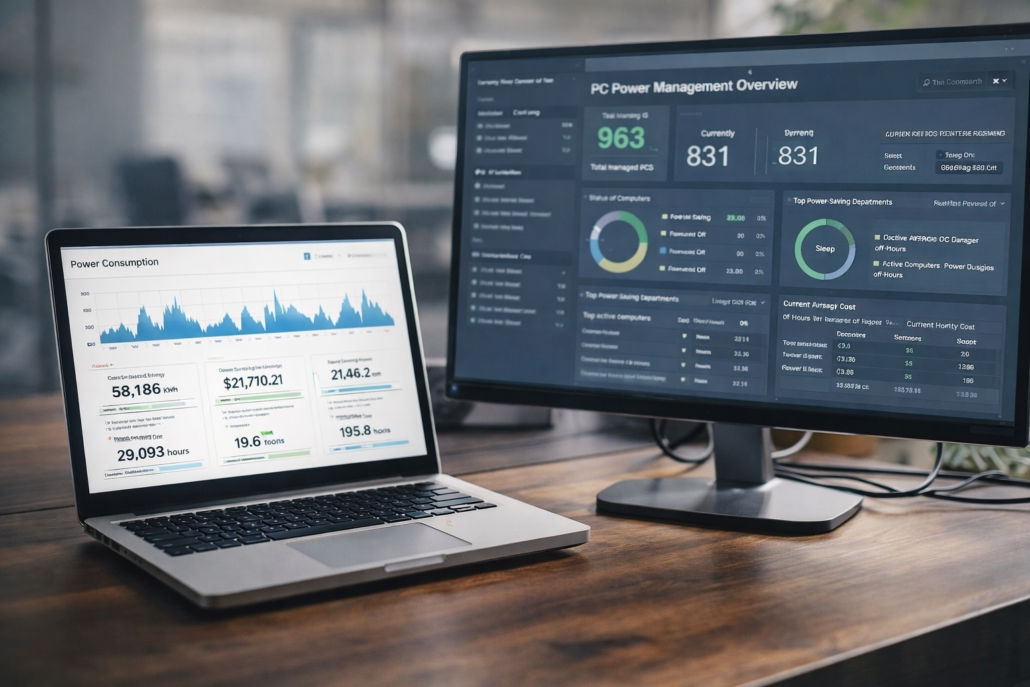
pc energy management dashboard showing power usage and savings metrics

The Real Business Impact

When organizations move beyond Wake-on-LAN and adopt a more complete approach, the impact becomes clear very quickly.

Energy costs drop because machines are no longer left running unnecessarily. IT teams spend less time on manual tasks and troubleshooting. Remote and hybrid employees gain reliable access to their work environments without needing to plan ahead. At the same time, organizations gain better control over their infrastructure and improve overall operational efficiency.

For companies managing large numbers of PCs, these improvements are not theoretical. They show up directly in reduced costs, smoother operations, and fewer daily headaches for IT teams.

Conclusion

Wake-on-LAN is a useful tool, but it was never designed to handle the complexity of modern enterprise environments. It solves a narrow problem, and when used on its own, it leaves significant gaps in control, visibility, and efficiency.

Organizations that want to truly optimize their IT operations and energy usage need to think beyond basic functionality. A more advanced, centralized approach ensures that computers are not only accessible when needed, but also managed intelligently at scale.

Wake-on-LAN is a basic method for turning on computers remotely. More advanced solutions build on this capability by adding automation, scheduling, centralized control, and reporting, making them suitable for enterprise environments.

Not reliably on its own. It often requires VPN access, port forwarding, or additional configuration, which makes it harder to deploy and manage across distributed environments.

Not by itself. It only powers devices on. Reducing energy usage requires a broader system that also manages shutdowns and power policies

Because large organizations need scalability, visibility, and centralized management. Wake-on-LAN alone does not provide these capabilities.

The most effective approach is using a centralized PC energy management system that combines remote wake-up, automation, and energy-saving policies.

What Are the Benefits of Automated PC Shutdown?

Automated PC shutdown reduces electricity costs by up to 60% annually for businesses running multiple workstations. When computers power down during non-working hours instead of idling overnight, organizations eliminate wasteful energy consumption that directly impacts operational budgets. A single desktop computer left running 24/7 consumes approximately 600 kWh per year, costing between $50-$75 depending on local electricity rates.

Beyond immediate cost savings, scheduled shutdowns extend hardware lifespan and strengthen security postures. The practice addresses multiple organizational challenges through a single automated process, making it particularly valuable for IT departments managing distributed workforces or multi-location operations.

Automated PC Shutdown

How Does Automated Shutdown Cut Energy Waste?

Computers in sleep mode still draw 5-10 watts continuously, accumulating unnecessary consumption during evenings and weekends. Complete shutdowns eliminate this phantom power drain entirely. The Environmental Protection Agency estimates that power management features, including scheduled shutdowns, prevent 44 million metric tons of greenhouse gas emissions annually across U.S. offices alone.

Modern automated shutdown tools like PowerPlug.ai calculate actual usage patterns and implement optimized schedules without manual intervention. The systems distinguish between active work periods and genuine idle time, ensuring shutdowns occur only when machines aren’t performing critical background tasks like security scans or system updates.

Does Shutdown Timing Affect Savings?

Yes, shutdown timing creates measurable differences in energy reduction. Workstations powered down at 6 PM instead of midnight save an additional 6 hours of consumption daily, translating to roughly 2,190 hours annually per machine. For a 50-computer office, this timing adjustment alone prevents approximately 10,950 kWh of waste each year.

Can Automated Shutdowns Work Across Multiple Locations?

Centralized management platforms enable consistent shutdown policies across geographically distributed teams. IT administrators configure time zone-specific schedules through single interfaces, ensuring Hong Kong offices shut down at appropriate local times while London branches follow their own schedules. This centralization eliminates the need for site-by-site configuration while maintaining flexibility for regional requirements.

What Security Advantages Come From Regular Shutdowns?

Powering down workstations nightly closes active network connections that hackers exploit for lateral movement within corporate systems. Cybersecurity researchers at the SANS Institute note that many ransomware attacks spread through networks by targeting computers left running overnight with stale security sessions. Automated shutdowns force fresh authentication cycles, disrupting this attack vector.

Regular reboots triggered by shutdown schedules also ensure security patches take effect promptly. Windows updates and antivirus definition files often require restarts to activate fully, creating vulnerability windows when machines run continuously for weeks. Nightly shutdown cycles guarantee these protective measures deploy within 24 hours of release.

How Do Shutdowns Prevent Data Breaches?

Unattended computers present physical security risks in shared office environments. Cleaning crews, contractors, or unauthorized visitors can access unlocked workstations displaying sensitive information. Automated shutdowns create clean slate starting points each morning, requiring proper authentication before any data access occurs. This practice proved crucial for financial services firms meeting SOC 2 compliance requirements around access control.

Does Automated Shutdown Extend Hardware Longevity?

Computer components degrade faster under continuous thermal stress. Hard drives, cooling fans, and power supplies rated for specific operational hour ranges reach end-of-life sooner when running 24/7 versus 8-10 hours daily. Dell’s enterprise hardware division estimates that reducing daily runtime from 24 to 10 hours can extend component lifespan by 40-50%.

Thermal cycling from daily shutdowns and startups does create minor stress, but the reduced cumulative operating hours far outweigh this factor. SSDs particularly benefit since write cycles, the primary lifespan limiter for solid-state storage, decrease proportionally with reduced active time. Organizations replacing hardware every 4-5 years can often extend refresh cycles to 6-7 years through consistent shutdown practices.

What About Wear From Daily Startups?

Modern computers handle startup stress far better than machines from previous decades. Contemporary power supplies and motherboards include surge protection and gradual voltage ramp-up systems that minimize component shock during boot sequences. Testing by hardware manufacturers shows that a computer starting once daily experiences negligible additional wear compared to continuous operation, while gaining substantial benefits from reduced total runtime.

How Do Automated Shutdowns Support Sustainability Goals?

Corporate sustainability initiatives require measurable emissions reductions. Automated PC shutdown provides quantifiable environmental impact through decreased electricity consumption. A 100-computer organization eliminating overnight idling prevents approximately 30 metric tons of CO2 emissions annually, equivalent to taking 6-7 passenger vehicles off roads for a year based on EPA greenhouse gas equivalencies.

This environmental benefit strengthens ESG reporting metrics increasingly scrutinized by investors and regulatory bodies. Technology companies particularly benefit from demonstrating operational efficiency in their own facilities before selling sustainability solutions to clients. The practice also supports LEED certification requirements for commercial buildings seeking points in the Energy and Atmosphere category.

Can Shutdown Automation Improve IT Productivity?

IT teams spend considerable time manually managing power states across device fleets. Automated shutdown eliminates walk-throughs reminding employees to power down equipment or finding machines left running over long weekends. This recovered time redirects toward strategic projects rather than repetitive operational tasks.

Standardized shutdown schedules also create predictable maintenance windows. System administrators schedule updates, backups, and security scans knowing exactly when machines will be offline and available for intervention without disrupting productivity. This predictability streamlines patch management and reduces the coordination overhead typically required for after-hours maintenance.

What Happens If Someone Needs Late-Night Access?

The PowerPlug Pro Wake Up Portal is specifically designed to address this critical challenge. This dedicated portal enables end-users and IT technicians to securely wake up and connect to the computers they are allowed to access with a single mouse click, regardless of the time of day. Whether an employee is working from home late at night, an IT administrator needs to perform emergency maintenance, or a team member requires urgent access to files on their office workstation, the Wake Up Portal ensures that power-saving measures never interfere with productivity or operational requirements.

The portal’s patented Wake-on-LAN technology works seamlessly across complex networks and multiple subnets, allowing remote power-up of computers from any power statewhether they’re in Sleep mode, Hibernate, or completely shut down. End-users can easily wake up their own computers without requiring IT intervention, eliminating the need for machines to remain powered on continuously “just in case” someone needs late-night access. This self-service capability empowers the workforce to maintain flexibility and productivity while the organization continues to benefit from significant energy savings.

From an IT perspective, the Wake Up Portal streamlines after-hours support by providing technicians with the ability to wake up individual machines, groups of computers, or even the entire fleet according to their assigned permissions. The centralized management interface ensures that all wake-up activities are logged and monitored, maintaining security protocols without compromising accessibility. This approach eliminates the traditional trade-off between energy efficiency and 24/7 availability, proving that organizations can achieve both substantial cost savings and operational flexibility simultaneously.

FAQ

Will automated shutdown interrupt important background tasks?


Modern shutdown automation checks for active processes before executing. Systems detect running backups, downloads, or updates and postpone shutdown until these tasks complete. PowerPlug.ai specifically monitors Windows Task Scheduler and common business applications to avoid workflow disruption while maintaining energy efficiency.

A 10-computer office typically saves $400-$600 annually through automated shutdowns, based on average U.S. electricity rates of $0.13 per kWh. Savings scale proportionally with fleet size, and businesses in regions with higher energy costs or those operating energy-intensive workstations see greater financial impact.

No, daily shutdown cycles benefit modern hardware more than they harm it. SSDs have no moving parts susceptible to startup mechanical stress, and reduced operating hours preserve their limited write cycle budgets. Contemporary computers design specifically accounts for regular power cycling as normal use.

Servers and workstations hosting essential services should remain excluded from shutdown schedules through policy configurations. Automation platforms allow granular control, shutting down general-use machines while keeping database servers, domain controllers, or monitoring systems online continuously. This selective approach balances efficiency with operational requirements.

PowerPlug.ai Automated Energy Management that generates savings

Implementing automated PC shutdown transforms energy consumption from an unmanaged cost center into a controllable operational variable. Organizations gain financial savings, security improvements, and environmental benefits through a single systematic change. PowerPlug.ai delivers these advantages through intelligent scheduling that adapts to actual usage patterns, ensuring maximum efficiency without workflow disruption. Take control of your energy costs and reduce your environmental footprint today with automated power management that works as hard as your team does.

Why is PC power management important for sustainability?

In the modern enterprise, the glow of computer screens is a constant. While each individual PC seems like a small consumer of electricity, the cumulative energy usage across an entire organization is staggering. Companies worldwide are setting ambitious sustainability goals, yet the significant environmental and financial cost of their IT infrastructure often goes unaddressed.

Inefficiently managed computers contribute directly to a larger carbon footprint and unnecessary operational expenses. Implementing a strategic PC power management policy isn’t just an IT task; it’s a fundamental step towards corporate responsibility, energy efficiency, and achieving critical Environmental, Social, and Governance (ESG) objectives.

How Much Energy Do Business PCs Really Waste?

The scale of energy waste from business computers is often underestimated. While an individual workstation might not seem power-hungry, consider an organization with hundreds or thousands of devices. Studies have consistently shown that a significant percentage of these PCs are left running at full power overnight, during weekends, and on holidays, despite being completely idle.

This continuous, unnecessary power draw accumulates into a massive amount of wasted kilowatt-hours (kWh) per year. This isn’t just a minor oversight; it’s a significant drain on resources that directly inflates utility bills and undermines sustainability efforts.

What is the Environmental Impact of This Wasted Energy?

The energy consumed by idle and inefficiently managed computers has a direct and measurable environmental cost. This impact extends beyond just a higher electricity bill and contributes significantly to a company’s overall carbon footprint. The key environmental consequences include:

Increased Carbon Emissions: The majority of electricity is still generated from burning fossil fuels. Every wasted kilowatt-hour, therefore, corresponds to a specific amount of carbon dioxide (CO2) and other greenhouse gases being released into the atmosphere, directly contributing to climate change.

Depletion of Natural Resources: Power generation is a resource-intensive process that consumes vast quantities of coal, natural gas, and water. By reducing energy demand, businesses can help conserve these finite resources for future generations.

Strain on Electrical Grids: Unnecessary, round-the-clock energy consumption puts a continuous strain on regional and national power grids. Smart power management helps to lower this baseline demand, contributing to a more stable and resilient energy infrastructure.

Power Management Carbon Footprint

How Does Power Management Reduce a Company’s Carbon Footprint?

The connection between PC power management and a reduced carbon footprint is direct and impactful. By ensuring that computers automatically enter low-power states – such as sleep or hibernate – or shut down completely when not in use, a company can slash its IT-related electricity consumption by up to 60%.

This drastic reduction in energy usage translates directly to a smaller volume of CO2 emissions attributable to the organization. For companies serious about meeting their ESG targets, intelligent energy management platforms like PowerPlug Pro offer a streamlined way to automate these savings and accurately report on CO2 reductions.

Beyond Sustainability, What are the Financial Benefits?

While the environmental argument is compelling, PC power management also offers a powerful financial incentive. Less wasted energy means significantly lower electricity bills. For a medium to large enterprise, the annual savings can amount to tens or even hundreds of thousands of dollars, directly boosting the bottom line. The return on investment (ROI) for implementing a dedicated power management solution is often realized in a matter of months, making it one of the most financially sound sustainability initiatives a company can undertake. It’s a clear win-win, where green practices lead directly to economic gains.

What are the Key Features of an Effective Power Management Solution?

To truly capture these benefits, a modern PC power management solution must offer more than the basic power-saving options built into an operating system. An enterprise-grade platform should provide a comprehensive set of tools for maximum impact. Key features to look for include:

Centralized and Granular Control: The ability for IT administrators to design, schedule, and enforce customized power policies across the entire network from a single, intuitive dashboard.

Intelligent Automation: Advanced systems that use AI to learn user behavior and work patterns, ensuring that power-saving actions are implemented without ever disrupting employee productivity.

Actionable Reporting and Analytics: Clear, detailed dashboards that visualize energy consumption, calculate financial savings, and quantify CO2 reductions, making it simple to track progress and report on ESG achievements.

Seamless IT Integration: The capability to integrate with other management tools, such as Microsoft SCCM, for tasks like remote Wake-on-LAN for security patches and software updates outside of work hours.

Take the First Step Towards a More Efficient Future

Failing to manage your organization’s PC power consumption is no longer a viable option. It represents a missed opportunity to make significant progress toward sustainability goals, reduce operational costs, and demonstrate corporate responsibility.

By embracing a proactive approach, you can turn your network of computers from a source of environmental and financial drain into a model of efficiency. Take control of your IT energy footprint today. Implementing a proven solution is the definitive first step toward building a greener, smarter, and more profitable workplace.

How much electricity do office PCs use when idle?

Office computers consume electricity constantly, even when employees aren’t actively using them. Understanding idle power consumption reveals a significant opportunity for businesses to reduce operating costs and environmental impact. With most office PCs sitting idle for 70% of their operational time, the cumulative energy waste across organizations represents a substantial challenge that modern power management solutions can effectively address.

What is the typical idle power consumption range for office computers?

Modern office desktop computers typically consume between 50 to 100 watts when idle, though this range can vary based on hardware configuration and age. Newer, energy-efficient models may use as little as 30-50 watts in idle state, while older systems or those with dedicated graphics cards can draw 100-170 watts even when performing no active tasks.

Laptops demonstrate significantly better efficiency, consuming only 15-30 watts when idle, making them an increasingly attractive option for environmentally conscious organizations seeking to minimize their energy footprint.

Why do idle computers still consume significant electricity?

Computers never truly reach zero power consumption while turned on because numerous background processes continue running to maintain system readiness. The CPU maintains minimal activity for system clock functions, memory refresh cycles, and network monitoring for incoming requests. Additionally, components like the motherboard, RAM modules, cooling fans, and power supply unit continue drawing power to stay operational. Even with modern power management features, these essential functions require a baseline electricity draw that accumulates substantially across multiple workstations.

idle computers

How much does idle PC consumption cost businesses annually?

The financial impact of idle computer consumption varies significantly based on local electricity rates, tariffs, and time-of-use pricing structures. Organizations in regions with higher commercial electricity rates or those operating in premium office spaces face particularly substantial costs from idle computer consumption. The true expense becomes apparent when calculating consumption across hundreds or thousands of workstations, with many enterprises discovering that idle PC electricity represents one of their largest controllable operating expenses.

What factors influence idle power consumption in office environments?

Several key factors determine how much electricity an office PC consumes when idle. Hardware configuration plays a primary role, as older processors and inefficient power supplies significantly increase baseline consumption. BIOS settings often ship with power-saving C-states disabled by default, preventing systems from entering lower power states. Operating system configuration directly controls component behavior during idle periods, yet many IT departments overlook these critical settings. Connected peripheral devices including monitors, printers, and external drives add to overall consumption. Background applications can consume 20% or more CPU resources even when minimized, preventing the system from reaching true idle states.

Can power management software make a substantial difference?

Power management software represents one of the most effective solutions for reducing idle electricity consumption in office environments. These specialized programs can automatically optimize power settings across entire networks, ensuring computers enter low-power states when inactive. Studies demonstrate that properly configured power management can reduce annual energy consumption by up to 60%, with most organizations achieving 30-40% reductions even with conservative settings.

PowerPlug Pro and similar enterprise solutions provide centralized control, allowing IT departments to implement consistent policies while maintaining system availability for remote updates and maintenance.

hidden costs pc electricity

What are the hidden costs beyond direct electricity expenses?

The true cost of idle computer consumption extends well beyond electricity bills. Air conditioning systems must work harder to remove heat generated by idle computers, typically adding 20-50% to cooling costs in office environments. This additional load accelerates HVAC system wear, increasing maintenance expenses and potentially shortening equipment lifespan. Furthermore, components in computers that run continuously experience faster degradation, leading to more frequent hardware replacements and higher IT infrastructure costs over time.

How do sleep and hibernate modes compare to idle state consumption?

Power-saving modes offer dramatic reductions compared to standard idle consumption. Sleep mode typically reduces power draw to just 3-5 watts, representing a 95% reduction from normal idle state. Hibernate mode achieves near-zero consumption by saving the system state to disk and powering down completely. While both modes enable quick system recovery, sleep mode provides faster wake times at the cost of slightly higher power consumption. Organizations implementing aggressive sleep policies can achieve substantial savings without impacting productivity.

Ready to Transform Your Office Energy Efficiency?

Idle computer consumption represents a hidden drain on your organization’s resources, silently increasing operating costs while contributing unnecessarily to your carbon footprint. PowerPlug’s intelligent power management solutions have helped organizations achieve returns on investment in as little as four months while reducing electricity consumption by up to 60%.

Take control of your office energy usage today – contact our team to discover how automated power management can deliver immediate savings without compromising productivity or system availability. Your path to a more sustainable, cost-effective IT infrastructure begins with understanding and optimizing idle power consumption.

Uncovering Hidden Energy Waste in Retail POS Systems

In today’s energy-conscious world, businesses are seeking innovative ways to reduce power consumption without compromising operational efficiency. At PowerPlug Ltd, we recently embarked on a pilot project with a mid-sized food retailer to analyze energy usage and PC power management across selected stores. The findings were enlightening and underscore the potential for significant energy savings in the retail sector.

The Challenge

Retail environments rely heavily on various technological systems, with Point of Sale (POS) systems being central to daily operations. While essential, our data revealed that approximately 75% of these systems remained powered on without active use for extended periods. This not only leads to unnecessary energy consumption but also increases operational costs.​

Our Approach

Understanding the retailer’s concern about potential disruptions to critical store functions, we conducted a thorough analysis of POS activity. This allowed us to identify underutilized machines and assess the feasibility of reducing their total number, thereby optimizing costs and efficiency.​

Implementing Energy-Saving Policies

In the second phase of the pilot, we introduced a straightforward energy-saving policy tailored to the retailer’s operational needs. By leveraging our PC power management solutions, we ensured that systems were only active when necessary, without affecting the functionality of essential store operations.

The Results

The implementation of these strategies led to a significant reduction in energy consumption, translating into substantial cost savings for the retailer. This pilot project exemplifies how targeted energy management can yield both environmental and economic benefits.

Conclusion

Our collaboration with the food retailer highlights the importance and effectiveness of proactive PC power management in the retail sector. By identifying inefficiencies and implementing tailored solutions, businesses can achieve meaningful energy savings and reduce their carbon footprint.

Call to Action

If you’re a retailer looking to optimize your energy usage and reduce operational costs, PowerPlug Ltd is here to help. Contact us today to learn how our PC power management solutions can benefit your organization.​

Office Energy Management

Power management strategies are essential for reducing electricity consumption in offices. By implementing automated shutdown schedules, adjusting power settings on computers and devices, and using energy-efficient appliances, businesses can significantly cut down on unnecessary energy usage. A well-planned strategy ensures that no power is wasted when equipment is not in use. How Can Reducing Office […]

Energy Efficiency Return On Investment

Investing in energy efficiency can lead to substantial cost savings and environmental benefits, but how do organizations determine whether these investments are worthwhile? Calculating ROI on energy efficiency investments involves comparing the upfront costs with the long-term financial benefits. Businesses must assess the cost of implementation, projected energy savings, and the payback period to ensure […]

Energy-Saving Tips For Office

Power management strategies are essential for reducing electricity consumption in offices. By implementing automated shutdown schedules, adjusting power settings on computers and devices, and using energy-efficient appliances, businesses can significantly cut down on unnecessary energy usage. A well-planned strategy ensures that no power is wasted when equipment is not in use. How Can Reducing Office […]

Energy Management Systems

An Energy Management System (EMS) is a technology-driven solution designed to monitor, control, and optimize an organization’s energy consumption. These systems integrate various energy monitoring tools to provide real-time insights into energy usage patterns, helping businesses make informed decisions to improve efficiency and reduce costs. By leveraging advanced analytics and automation, EMS helps companies implement […]

Energy-Efficient Office Equipment

In today’s world, where environmental consciousness is paramount, businesses are increasingly seeking ways to reduce their carbon footprint. One significant aspect of this is the adoption of green office equipment. By making informed choices about the devices we use daily, we can contribute to a more sustainable and energy-efficient workplace. Why Should We Care About […]

Engaging Employees In Sustainability

Sustainability efforts within an organization can only be successful when employees are actively involved. Employee energy-saving habits play a key role in reducing an organization’s carbon footprint and lowering operational costs. By fostering a culture of responsibility and awareness, businesses can significantly enhance their energy efficiency while also promoting a more eco-conscious workplace. How Can […]

Automated PC Wake-Up Scheduling

In today’s fast-paced business environment, energy efficiency and productivity are critical. Automated PC Wake-Up Scheduling offers a practical solution to ensure computers are powered on and ready when needed while minimizing energy waste. This advanced feature from PowerPlug empowers organizations to optimize their PC power management, reducing costs and improving operational efficiency. What Is Automated […]

PC Wake-Up Optimization

In today’s fast-paced world, optimizing PC wake-up processes is essential for organizations aiming to boost efficiency and automation. By ensuring that your devices are ready for use when needed, you can reduce downtime and enhance productivity. This article will guide you through the concept of PC Wake-Up Optimization, its benefits, and how you can implement […]

Why is PC Power Management Crucial for Your Business?

PC power management is a critical practice for modern businesses aiming to enhance efficiency and reduce costs. By effectively managing computer power consumption, organizations can minimize energy waste, lower electricity bills, and extend the lifespan of their hardware. This approach not only supports financial savings but also contributes to environmental sustainability. This article will explore […]

How Can PowerPlug Pro Help with CSRD Compliance?

The Corporate Sustainability Reporting Directive (CSRD) is a new regulation from the European Union aimed at enhancing and standardizing sustainability reporting across companies operating within the EU. It builds upon the Non-Financial Reporting Directive (NFRD) and significantly expands the scope and detail of required sustainability disclosures. Essentially, the CSRD is designed to improve the transparency […]

CORPORATE SUSTAINABILITY REPORTING DIRECTIVE

If you’re looking to get a handle on the Corporate Sustainability Reporting Directive (CSRD), you’re in the right place. This directive, adopted by the European Union, is all about improving how companies report their sustainability practices. It focuses on transparency and accountability, making sure businesses disclose their environmental, social, and governance (ESG) impacts. Whether you’re […]

What Are The Benefits Of Pc Power Management Software For Organizations?

How Does PC Power Management Software Benefit Your Organization?

In today’s fast-paced business environment, efficiency and cost savings are paramount. PC power management software provides a solution that addresses both of these needs. Organizations can significantly reduce energy consumption and operational costs by automating the management of computer power usage.

This article explores the various benefits of PC power management software to organizations across different industries, highlighting how it minimizes the need for monitoring inactive computers and leads to substantial cost savings. Understanding these advantages can help businesses make informed decisions about implementing such technologies.

How Does PC Power Management Software Benefit Your Organization

What is PC Power Management Software?

PC power management software is a solution designed to control and optimize the power consumption of computers within an organization. This type of software allows IT administrators to create and implement power policies that manage when and how computers should enter low-power states, such as sleep or hibernation, during periods of inactivity. The primary goal is to reduce energy consumption without negatively impacting productivity or interfering with daily operations.

One key feature of PC power management software is the ability to customize power settings based on specific requirements. For example, administrators can define different power policies for various departments or user groups, ensuring that the power settings align with each group’s unique needs. These policies can dictate behavior during both work and non-work hours, enabling a flexible approach to energy management.

Additionally, PC power management software often includes functionalities for scheduled and on-demand wake-ups. This feature allows IT staff to wake up computers remotely for maintenance or updates, ensuring that all necessary tasks are completed without requiring physical access to each machine. By automating these processes, organizations can achieve significant energy savings while maintaining the operational readiness of their IT infrastructure.

How Does PC Power Management Software Reduce Monitoring of Inactive Computers?

PC power management software significantly reduces the need for constant monitoring of inactive computers by automating various processes. One of the key features is the ability to create customized power policies. These policies can be tailored to match the specific work patterns and activities of employees, ensuring that computers are only powered on when necessary. By setting these conditions, the software ensures that PCs enter low-power states or shut down entirely during periods of inactivity.

Automated Power State Transitions

The software handles transitions between power states automatically. For instance, it can put computers into sleep mode after a specified period of inactivity and wake them up when they are needed. This eliminates the need for IT staff to manually monitor and manage the power status of each machine, freeing up valuable time and resources.

Scheduled Maintenance and Wake-Ups

With scheduled maintenance and wake-up capabilities, IT technicians can plan and execute maintenance tasks without having to be physically present. The software can wake up PCs at predetermined times to perform updates, backups, or other essential operations, and then return them to a low-power state once the tasks are completed. This ensures that maintenance activities do not disrupt daily operations and that computers are always ready for use when needed.

Secure Remote Access

The Wake Up Portal feature allows both end-users and IT technicians to securely wake up and access computers remotely with a single click. This functionality is particularly useful for remote workers or in scenarios where immediate access to a specific machine is required. By reducing the need for physical monitoring and manual intervention, PC power management software streamlines operations and enhances overall efficiency.

What Are the Cost-Saving Advantages for Business Owners?

PC power management software offers significant cost-saving advantages for business owners. By efficiently managing the power consumption of PCs, organizations can reduce their energy bills and operational costs. Here are some key ways this software helps in saving costs:

Reduced Energy Consumption

One of the primary benefits of PC power management software is the reduction in energy consumption. By automatically powering down inactive computers during non-work hours and optimizing power use during work hours, businesses can significantly cut their electricity costs. This is especially beneficial for large organizations with hundreds or thousands of PCs.

Lower Maintenance Costs

With the ability to schedule maintenance activities during off-peak hours, the software ensures that PCs are in optimal condition without disrupting daily operations. This proactive approach minimizes the need for emergency repairs and extends the lifespan of hardware, leading to lower maintenance and replacement costs.

Enhanced IT Efficiency

The software allows IT technicians to manage and monitor PCs remotely, reducing the need for on-site interventions. This remote management capability not only saves time but also reduces travel and labor costs associated with IT support. IT teams can focus on more strategic tasks rather than routine maintenance.

Improved Productivity

By ensuring that PCs are ready for use when employees need them, the software helps maintain high levels of productivity. Employees spend less time waiting for systems to boot up or for IT support to address power-related issues. This translates to more efficient use of work hours and, ultimately, cost savings for the business.

In summary, PC power management software provides business owners with a robust tool to manage energy consumption, reduce maintenance and operational costs, and enhance overall productivity. These cost-saving advantages make it a valuable investment for any organization looking to optimize its IT infrastructure.

How Does PC Power Management Software Benefit Different Industries?

PC power management software, like PowerPlug Pro, offers numerous benefits across various industries, enhancing operational efficiency and reducing costs.

Manufacturing Industry

In the manufacturing sector, energy consumption is a significant concern. PC power management software helps by reducing the energy usage of idle computers, leading to lower electricity bills. Scheduled wake-ups ensure that maintenance tasks are performed during non-peak hours, minimizing disruptions to production schedules. By tailoring power policies to specific work shifts, manufacturers can optimize energy use without affecting productivity.

Healthcare Industry

Healthcare facilities often operate around the clock, requiring reliable access to computer systems. PC power management software ensures that essential systems remain available while reducing unnecessary power consumption. Customized power policies allow IT departments to schedule updates and maintenance during off-peak hours, ensuring that medical staff have uninterrupted access to patient information and critical applications. This approach not only saves energy but also enhances the reliability of healthcare services.

Educational Institutions

Schools, universities, and other educational institutions benefit from PC power management software by optimizing the use of computer labs and administrative offices. By implementing power-saving policies during non-operational hours, educational institutions can significantly reduce energy costs. Additionally, scheduled wake-ups for system updates and maintenance ensure that computers are always ready for use during class hours, enhancing the overall learning experience.

Financial Services

In the financial sector, where data security and uptime are critical, PC power management software plays a crucial role. By enabling secure wake-ups and remote access, financial institutions can perform necessary updates and maintenance without compromising security or operational efficiency. This reduces the need for on-site monitoring, leading to cost savings and improved resource allocation.

By implementing PC power management software, organizations across these industries can achieve substantial energy savings, reduce operational costs, and maintain high levels of productivity and service quality.

PC Power Management Software Benefit Your Organization

How Do Customized Power Policies Improve Efficiency?

Customized power policies are a key feature of PC power management software that significantly enhance organizational efficiency. By tailoring power settings to the specific needs and activities of employees, organizations can optimize energy usage without compromising productivity or IT operations.

Tailoring to Work and Non-Work Hours

One of the primary benefits of customized power policies is the ability to define distinct conditions for work and non-work hours. During work hours, computers can be set to operate at full power, ensuring that employees have the resources they need to perform their tasks efficiently. Conversely, during non-work hours, power settings can be adjusted to reduce energy consumption, such as by putting PCs into sleep mode or shutting them down entirely. This approach not only saves energy but also extends the lifespan of hardware by reducing wear and tear.

Group-Specific Policies

Another advantage is the ability to assign different power policies to various groups within the organization. For example, administrative staff, IT personnel, and creative teams often have different work patterns and requirements. Customized power policies allow IT administrators to create specific settings for each group, ensuring that everyone has the optimal power configuration for their role. This level of customization helps to maximize efficiency by aligning power usage with actual needs.

Automated Adjustments and Flexibility

Customized power policies also offer the flexibility to automate adjustments based on real-time conditions. For instance, if a computer remains idle for a certain period, the software can automatically reduce its power consumption. This automation minimizes the need for manual intervention, allowing IT staff to focus on more critical tasks. Additionally, the flexibility to quickly modify power settings in response to changing circumstances or special projects ensures that the organization can adapt swiftly without unnecessary downtime.

In summary, customized power policies enhance efficiency by aligning power usage with the specific needs of employees, optimizing energy consumption during different times, and providing the flexibility to adapt to changing conditions. This results in significant energy savings and improved operational effectiveness.

How Do Scheduled and On-Demand Wake-Ups Enhance Operational Effectiveness?

Scheduled and on-demand wake-ups are crucial features of PC power management software that significantly enhance operational effectiveness. These features allow IT technicians to manage computer resources efficiently, ensuring that maintenance and service operations do not interfere with daily business activities.

Scheduled Wake-Ups

Scheduled wake-ups enable IT departments to plan and execute maintenance tasks during non-working hours. For example, software updates, system backups, and security scans can be scheduled to run during the night or weekends. This approach minimizes disruption to employees, as their workstations are ready and fully operational during business hours. By automating these tasks, organizations can reduce the need for manual intervention, which saves time and reduces the risk of human error.

On-Demand Wake-Ups

On-demand wake-ups provide IT technicians and authorized users the flexibility to power on computers remotely as needed. This feature is particularly useful for remote troubleshooting, emergency maintenance, or accessing files and applications outside regular working hours. With a secure wake-up portal, users can wake up and connect to their computers with a single click, ensuring quick and secure access to necessary resources.

Operational Efficiency

Combining scheduled and on-demand wake-ups helps organizations maintain a high level of operational efficiency. IT teams can ensure that all maintenance activities are conducted without impacting user productivity. Additionally, remote access capabilities allow for swift responses to IT issues, reducing downtime and maintaining business continuity.

In summary, scheduled and on-demand wake-ups provided by PC power management software like PowerPlug Pro optimize resource utilization, streamline maintenance processes, and enhance overall operational effectiveness.

Conclusion

PC power management software offers substantial benefits for organizations across various industries. By reducing the monitoring of inactive computers, this software helps businesses achieve significant cost savings without compromising employee productivity or disrupting IT operations. Customized power policies and scheduled wake-ups further enhance energy efficiency and operational effectiveness. Implementing such solutions not only reduces energy consumption but also contributes to a greener environment. In summary, PC power management software is a valuable tool that supports both economic and environmental goals, making it an essential component for modern organizational IT strategies.

How Does Power Management Work?

How Does Power Management Work to Save Costs?

In today’s digital age, energy efficiency is a significant concern for businesses across various industries. Power management systems, such as PowerPlug Pro, play a crucial role in addressing this issue by optimizing the energy consumption of computers and other electronic devices. Companies can significantly reduce their energy costs and environmental footprint by implementing a robust power management solution.

This article explores how power management works, mainly focusing on reducing the monitoring of idle computers and saving costs for business owners. We will delve into the mechanisms behind these systems, their cost-saving benefits, and their advantages to different industries. Understanding these aspects can help businesses make informed decisions about integrating power management solutions into their operations.

how does power managment work to save costs

What is Power Management?

Power management is the process of monitoring and controlling the power consumption of various devices and systems within an organization. It involves implementing strategies and technologies to reduce energy usage, thereby cutting costs and minimizing the environmental impact. In the context of IT infrastructure, power management primarily focuses on optimizing the energy consumption of computers and other electronic devices.

Power management systems, like PowerPlug Pro, allow organizations to create customized power policies tailored to their specific needs. These systems can manage thousands of PCs, ensuring efficient energy use without interrupting daily operations or affecting employee productivity. By automating power-saving measures, such as putting idle computers to sleep or turning them off during non-working hours, organizations can significantly reduce their energy bills.

Automated Power Policies

Automated power policies are a key feature of power management systems. These policies define the conditions under which computers and other devices should enter low-power states. For example, a policy might specify that all computers should go into sleep mode after 15 minutes of inactivity during work hours and shut down completely during non-working hours. These policies can be customized to fit the specific needs of different departments or groups within an organization, ensuring that power-saving measures do not interfere with essential tasks.

Scheduled and On-Demand Wake-Ups

Another important aspect of power management is the ability to schedule and perform on-demand wake-ups. IT technicians can schedule wake-ups for maintenance tasks, such as software updates or security scans, ensuring that these activities do not disrupt employees during working hours. Additionally, on-demand wake-ups allow IT staff and end-users to remotely access computers as needed, ensuring that work can continue smoothly even if a device has entered a low-power state.

By implementing a robust power management system, organizations can effectively manage their energy consumption, reduce costs, and contribute to a more sustainable future.

How Does Power Management Reduce Monitoring of Idle Computers?

Power management is a critical strategy for reducing the energy consumption of computers that are not actively in use. By implementing automated power policies and utilizing scheduled and on-demand wake-ups, businesses can significantly decrease the amount of time and resources spent on monitoring idle machines. This approach not only conserves energy but also reduces operational costs and enhances overall efficiency.

Automated Power Policies

One of the key components of power management is the creation of automated power policies. These policies are designed to manage the power usage of computers based on their activity levels. For example, a computer that has been inactive for a certain period can be automatically put into a low-power state or even shut down completely. This automation ensures that no computer remains powered on unnecessarily, thus reducing energy waste.

PowerPlug Pro allows IT administrators to customize these power policies to fit the specific needs of different departments or user groups within an organization. Policies can be tailored to ensure that critical systems remain operational during work hours while non-essential systems are powered down when not in use. This level of customization is crucial for balancing energy savings with productivity.

Scheduled and On-Demand Wake-Ups

Another important feature of effective power management is the ability to schedule and perform on-demand wake-ups. Scheduled wake-ups are particularly useful for maintenance activities that need to be conducted during off-hours. IT technicians can set specific times for computers to power on, allowing for updates, backups, and other maintenance tasks to be completed without interrupting daily operations.

On-demand wake-ups provide flexibility for situations where immediate access to a computer is required. For instance, if an employee needs to access their workstation remotely, they can use the PowerPlug Pro Wake Up Portal to securely power on their computer with a single click. This eliminates the need for the computer to remain powered on continuously, thereby saving energy while still providing instant access when needed.

By combining automated power policies with scheduled and on-demand wake-ups, businesses can effectively manage the power usage of their computers. This dual approach ensures that computers are only consuming energy when absolutely necessary, significantly reducing the overhead associated with monitoring idle machines.

In summary, power management reduces the need for constant monitoring of idle computers by employing automated power policies and enabling scheduled and on-demand wake-ups. These strategies ensure that computers are only powered on when needed, leading to substantial energy savings and lower operational costs. Implementing a robust power management solution like PowerPlug Pro allows businesses to optimize their energy usage while maintaining high levels of productivity and efficiency.

How Does Power Management Save Costs for Business Owners?

Implementing a power management system like PowerPlug Pro can lead to significant cost savings for business owners. By optimizing the power usage of computers within an organization, businesses can reduce their energy consumption and operational expenses. Here’s how power management achieves this:

Reduced Energy Consumption

One of the primary ways power management saves costs is by reducing energy consumption. Power management systems are designed to minimize the power usage of computers when they are not in active use. This is accomplished through various strategies such as putting idle computers into low-power states, turning off monitors after a period of inactivity, and managing power settings based on user activity patterns.

For instance, during non-work hours, power management systems can ensure that all non-essential computers are powered down or put into sleep mode. This reduces the overall energy consumption of the organization. Over time, these small savings can add up to a substantial reduction in the electricity bill.

Efficiency Without Compromising Productivity

Another significant advantage of power management is that it enhances efficiency without compromising productivity. IT technicians can create customized power policies tailored to the specific needs of different departments or employee groups. These policies ensure that computers are only using as much power as necessary based on their activity.

For example, during maintenance windows, computers can be scheduled to wake up for necessary updates and then return to a low-power state once the maintenance is complete. This means that IT operations can continue smoothly without requiring all computers to be fully powered on at all times. Additionally, on-demand wake-up features allow employees to quickly and securely access their computers remotely, ensuring that productivity is maintained even when energy-saving measures are in place.

Furthermore, the PowerPlug Pro Wake Up Portal provides a user-friendly interface for both end-users and IT technicians, allowing them to wake up and connect to necessary computers with a single click. This seamless integration ensures that power management does not interfere with the daily operations of the business.

By implementing these strategies, businesses can achieve a balance between reducing energy consumption and maintaining operational efficiency. This not only leads to cost savings but also supports environmental sustainability efforts by lowering the organization’s carbon footprint.

Overall, power management systems like PowerPlug Pro offer a practical solution for businesses looking to reduce their energy costs without sacrificing productivity. By intelligently managing the power usage of computers, these systems provide a reliable way to achieve substantial cost savings and enhance operational efficiency.

power managment work to save costs

What Are the Benefits of Power Management in Different Industries?

Healthcare Industry

In the healthcare industry, power management ensures that critical systems remain operational while non-essential devices are powered down when not in use. This reduces energy consumption and operational costs without compromising patient care. For example, administrative PCs can be set to enter low-power modes during off-hours, while essential medical equipment remains fully powered. This approach not only cuts down on electricity bills but also extends the lifespan of non-critical devices by reducing wear and tear.

Educational Institutions

Educational institutions can benefit significantly from power management systems. Schools and universities often have a large number of computers that are used sporadically throughout the day. Implementing a power management solution like PowerPlug Pro can automatically put idle computers into sleep mode, thus saving energy. During periods such as holidays or weekends, the system can ensure that all non-essential devices are completely powered down, leading to substantial cost savings. Additionally, IT departments can schedule maintenance tasks during off-peak hours without disrupting the educational process.

Corporate Offices

Corporate offices are another area where power management can provide substantial benefits. By creating customized power policies, companies can ensure that computers and other office equipment are only using energy when necessary. For instance, computers can be set to power down after a certain period of inactivity and wake up just before the workday begins. This not only reduces energy costs but also aligns with corporate sustainability goals. Moreover, features like the Wake Up Portal allow employees and IT staff to securely and conveniently access their machines remotely, ensuring flexibility and continued productivity.

Power management systems like PowerPlug Pro offer a versatile and effective solution for different industries looking to reduce their energy consumption and operational costs. By implementing such systems, organizations can achieve significant savings while maintaining the efficiency and productivity of their operations.

Summary

In conclusion, power management systems like PowerPlug Pro provide significant benefits for businesses across various industries. By reducing the monitoring of idle computers and ensuring efficient energy usage, these systems help save costs without compromising productivity. Automated power policies and scheduled wake-ups allow IT technicians to manage maintenance activities seamlessly. The Wake Up Portal further enhances operational efficiency by enabling secure, on-demand access to necessary computers. Overall, implementing a power management solution is a strategic move that leads to substantial cost savings and improved energy efficiency, making it a valuable investment for any organization.

Why Is Pc Power Management Important?

Why is PC Power Management Crucial for Your Business?

PC power management is a critical practice for modern businesses aiming to enhance efficiency and reduce costs. By effectively managing computer power consumption, organizations can minimize energy waste, lower electricity bills, and extend the lifespan of their hardware. This approach not only supports financial savings but also contributes to environmental sustainability. This article will explore the importance of PC power management across various industries, highlighting how it helps monitor idle computers and offers significant cost benefits for business owners.

Why Is Pc Power Management Important for your business

What is PC Power Management?

PC power management refers to the practice of controlling and optimizing the energy consumption of personal computers and related devices. This involves using software and hardware solutions to manage when and how computers use power, ensuring energy is not wasted when machines are idle or not in use.

One key component of PC power management is the ability to create customized power policies. These policies can be tailored to an organization’s specific needs, taking into account employees’ work habits and the operational requirements of different departments. For example, computers in administrative offices might have different power settings compared to those in a 24/7 customer support center.

A crucial feature of PC power management is the scheduling of automated actions such as shutdowns, wake-ups, and sleep modes. IT technicians can set up these schedules to perform routine maintenance tasks during off-peak hours, minimizing disruptions to productivity. Additionally, on-demand wake-up capabilities allow for remote access and servicing, further enhancing operational efficiency.

Another important aspect is the use of a centralized management portal. This portal enables IT administrators to monitor and control the power settings of all PCs within the network from a single interface. It ensures that power-saving measures are uniformly applied across the organization, helping to achieve significant energy savings.

In essence, PC power management is about striking a balance between reducing energy consumption and maintaining the necessary functionality and performance of computers. By implementing effective power management strategies, businesses can lower their electricity bills, reduce their carbon footprint, and extend the lifespan of their computer hardware.

Why is PC Power Management Important for Different Industries?

PC power management is critical for businesses across various sectors. By effectively managing their computers’ power usage, organizations can significantly cut down on energy costs, enhance operational efficiency, and contribute to sustainability efforts. This section explores the specific benefits of PC power management for different industries.

How Does It Benefit the IT Sector?

In the IT sector, where large networks of computers are commonplace, efficient power management is essential. IT departments can utilize power management solutions to monitor and control the power usage of thousands of PCs. By scheduling automatic shutdowns during non-working hours and waking up systems only when necessary, organizations can avoid unnecessary energy consumption. This reduces electricity bills and prolongs the hardware’s lifespan, resulting in lower maintenance costs.

Moreover, power management tools can help IT technicians perform remote maintenance tasks without the need for physical presence. This flexibility ensures that IT operations run smoothly without disruptions, even outside of regular business hours. In essence, power management enhances both cost efficiency and operational effectiveness in the IT industry.

What Advantages Does It Offer to Manufacturing?

Manufacturing industries often operate on tight schedules with high energy demands. Implementing PC power management can lead to substantial savings by reducing the power consumption of computers used in administrative and production support roles. By monitoring and managing the power usage of these systems, manufacturers can lower their overall energy consumption, contributing to reduced operational costs.

Additionally, manufacturing environments can benefit from customized power policies tailored to different shifts and operational needs. For example, during night shifts or low-production periods, non-essential computers can be powered down to save energy. This strategic approach ensures that energy is used efficiently without compromising productivity. Over time, these savings can be significant, allowing manufacturers to allocate resources more effectively.

How Can the Service Industry Save Costs?

The service industry, encompassing sectors such as finance, healthcare, and customer support, also stands to gain from effective PC power management. In these environments, computers are a critical part of day-to-day operations. However, many of these systems remain idle for extended periods, such as during breaks, after hours, or on weekends.

By implementing power management solutions, service providers can create power policies that align with their operational schedules. Automated shutdowns and wake-ups ensure that computers are only consuming power when necessary. For example, a financial firm can schedule all workstations to shut down automatically after business hours and wake up just before employees arrive in the morning. This reduces energy waste and lowers electricity bills.

Furthermore, power management can enhance security in the service industry. By ensuring that computers are powered down when not in use, organizations can minimize the risk of unauthorized access and potential data breaches. This added layer of security, combined with cost savings, makes PC power management a valuable tool for service providers.

In summary, PC power management is a versatile solution that offers significant benefits across various industries. From the IT sector’s need for efficient operations to the manufacturing industry’s focus on cost savings and the service industry’s requirement for security and efficiency, power management plays a crucial role in optimizing energy usage and reducing operational costs. By adopting these practices, businesses can achieve greater sustainability and financial health.

How Does PC Power Management Contribute to Cost Savings?

PC power management is an essential strategy for businesses aiming to reduce operational costs and improve efficiency. By implementing effective power management practices, organizations can achieve substantial cost savings. Here’s how:

Monitoring and Managing Idle Computers

One of the primary ways PC power management contributes to cost savings is through the monitoring and managing of idle computers. Many businesses have computers that remain powered on even when not in use, leading to unnecessary energy consumption. By utilizing PC power management software, companies can automatically power down idle machines, reducing energy waste and lowering electricity bills.

Customized Power Policies

PowerPlug Pro, for example, allows IT administrators to create customized power policies tailored to specific work and non-work hours. These policies ensure that computers are only using power when necessary. During off-peak times, such as nights and weekends, PCs can be set to enter low-power states or shut down completely. This targeted approach minimizes energy usage without disrupting productivity.

Scheduled and On-Demand PC Wake-Ups

Another cost-saving feature is the ability to schedule and perform on-demand PC wake-ups. IT technicians can schedule wake-ups for maintenance activities during low-usage periods, ensuring that updates and backups are performed efficiently without keeping all systems running continuously. Additionally, the wake-up portal enables end-users and IT staff to remotely wake up and access PCs as needed, further optimizing energy use.

Reducing Overall Energy Consumption

By optimizing power settings across all devices, businesses can significantly reduce their overall energy consumption. This not only lowers electricity costs but also extends the lifespan of computer hardware by reducing wear and tear associated with constant operation. Over time, these savings can accumulate, providing a substantial return on investment for the power management solution.

Power Management Reporting

Many PC power management solutions offer detailed reporting features that track and analyze energy usage. These reports provide valuable insights into energy consumption patterns, helping businesses identify further opportunities for cost savings. By continuously monitoring and adjusting power settings based on these insights, organizations can maintain optimal energy efficiency.

In summary, PC power management is a crucial tool for businesses looking to save on operational costs. By effectively managing and reducing energy consumption, companies can achieve significant financial benefits while also contributing to environmental sustainability.

_Pc Power Management Importance

What Are the Environmental Benefits of PC Power Management?

Implementing PC power management has significant environmental benefits, making it a crucial practice for businesses committed to sustainability. By optimizing energy usage, organizations can reduce their carbon footprint and contribute to global efforts to mitigate climate change. Here are some key environmental benefits of PC power management:

Reduction in Energy Consumption

One of the primary environmental benefits of PC power management is the reduction in energy consumption. By ensuring that computers are powered down or put into low-energy states when not in use, businesses can significantly decrease their overall energy usage. This reduction in energy demand means that less electricity needs to be generated, which in turn reduces the amount of fossil fuels burned in power plants, leading to lower greenhouse gas emissions.

Decreased Carbon Footprint

Lower energy consumption directly translates to a decreased carbon footprint. Since the production of electricity is often associated with the emission of carbon dioxide and other harmful gases, reducing energy use helps lower these emissions. By implementing power management practices, businesses can play a part in reducing the overall carbon emissions, thereby contributing to a healthier planet.

Extended Equipment Lifespan

Efficient power management also contributes to the extended lifespan of computer equipment. By minimizing the time that computers are fully powered on, wear and tear on components is reduced. This means that devices can be used for a longer period before needing replacement, which reduces electronic waste. Less electronic waste means fewer resources are needed to manufacture new equipment, and less waste ends up in landfills, further benefiting the environment.

In summary, PC power management not only helps businesses save on operational costs but also plays a vital role in protecting the environment. By reducing energy consumption, decreasing carbon footprints, and extending the lifespan of equipment, companies can significantly impact the planet.

Summary

PC power management is essential for businesses across various industries. It helps monitor and manage idle computers, leading to significant cost savings and improved energy efficiency. Implementing these practices ensures optimal productivity and operational efficiency without compromising on environmental sustainability. By reducing unnecessary power consumption, businesses not only save on operational costs but also contribute positively to global energy conservation efforts. In essence, effective PC power management is a strategic move that benefits both the bottom line and the environment.