Government PC Power Management
By Nimrod Yedaya, VP Customer Experience
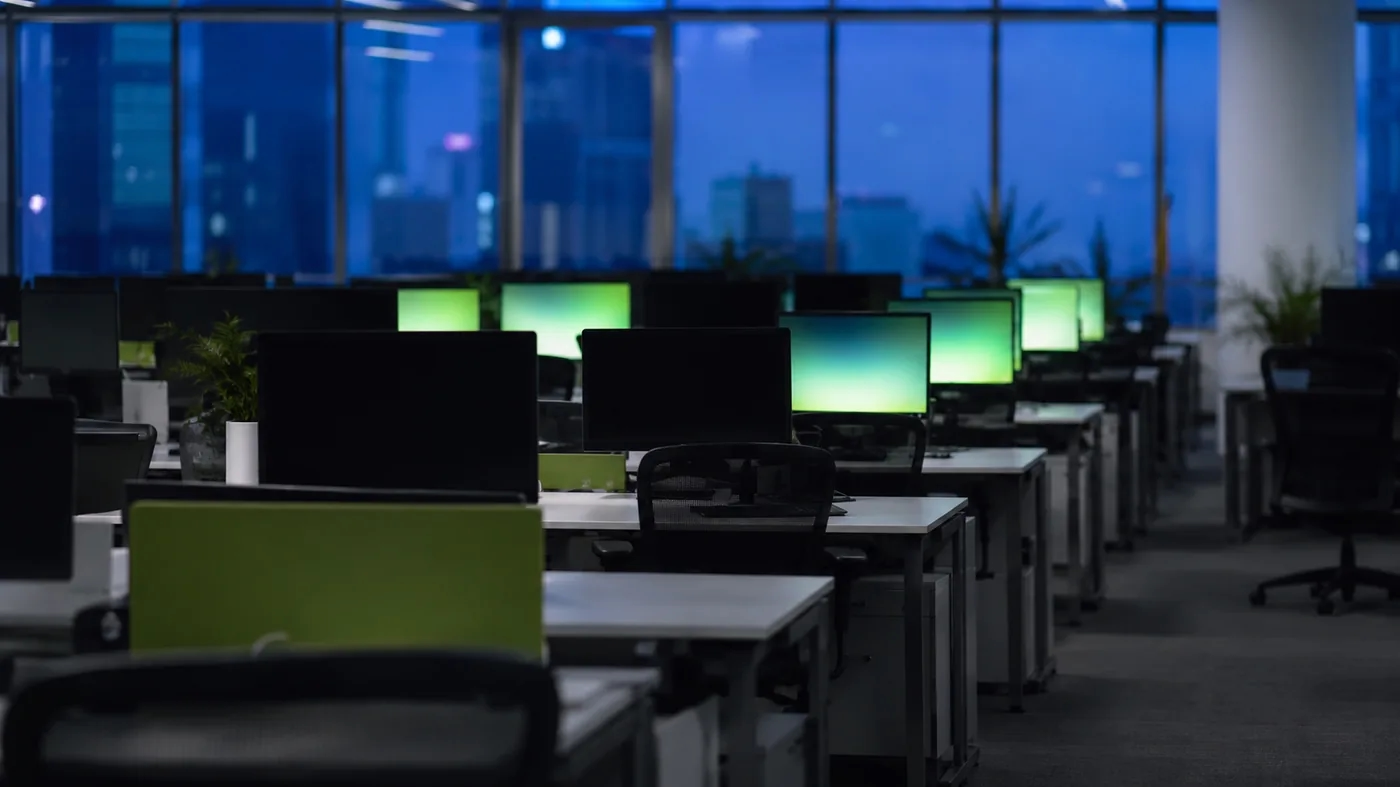
A government agency can usually tell you the running cost of its vehicle fleet to the cent. Ask what it spends keeping desktop PCs on overnight, and the room goes quiet.
The number exists. It just never had an owner.
Across dozens of departments, thousands of machines stay powered on through the night so that someone, somewhere, can reach them if the need arises. Most nights nobody does. That standing cost comes straight out of a public budget, and it is one of the very few an agency can cut without touching a service, a post, or a working hour. Government PC power management is the practice of reclaiming it, carefully enough that security, compliance, and availability are never the price of the saving.
Why the machines stay on all night
The overnight habit is not negligence. It is caution.
Ask the IT team and every reason holds up. A night-shift worker needs remote access. A patch job runs at three in the morning. An auditor might request a system at short notice. In a sector where being unreachable can mean missing a legal or a safety obligation, leaving everything on has always felt like the responsible default.
That logic made sense while the alternative meant losing access. It stopped making sense the moment machines could be shut down and woken again on demand, reliably, from anywhere. The caution was never wrong. The constraint underneath it quietly disappeared, and the policy simply never caught up.
The cost hiding across departments
Take a mid-size agency running 4,000 desktops. Each draws somewhere between 60 and 100 watts while it sits idle, which is normal for office hardware. Leave them on for the twelve to fourteen hours a night nobody is using them. Now stretch that across 250 working nights a year, and add the weekends the buildings stand empty.
That is 4,000 machines doing nothing, all night, on the public account.
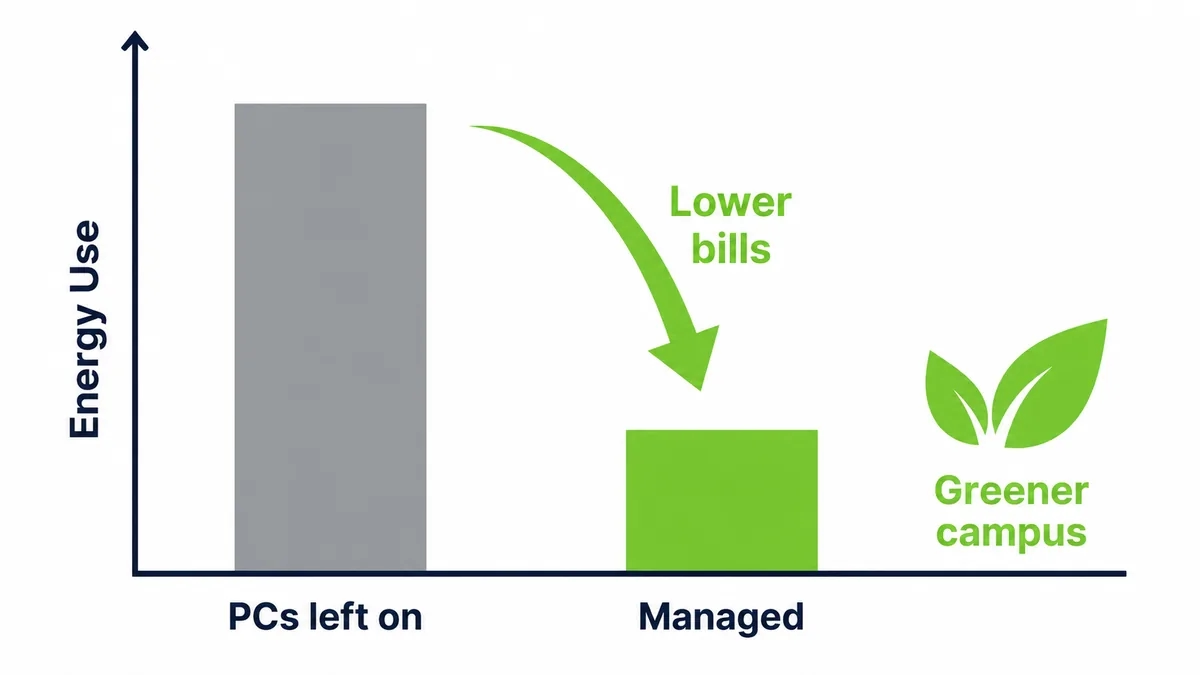
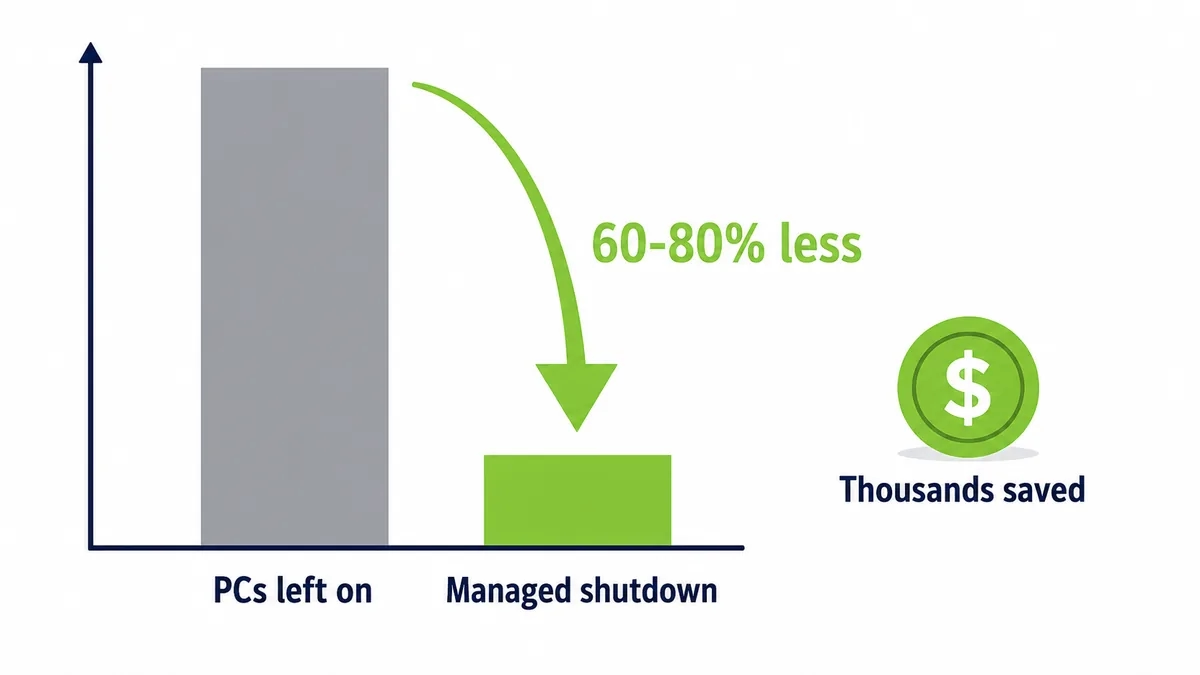
Public buildings are already energy-intensive by nature, as the US Environmental Protection Agency notes in its work on facility energy, so idle PCs land on top of a bill that is under scrutiny to begin with. Managed power cuts PC energy consumption by up to 60 percent, and unlike most savings it arrives without new hardware, a reorganization, or any reduction in what the public receives.
The secure network problem nobody expects
Public-sector networks are among the most carefully segmented anywhere, and that is exactly what defeats the obvious fix.
Standard Wake-on-LAN sends a broadcast that stops dead at the subnet boundary. Agencies split their networks into subnets and security zones on purpose, department by department and site by site. So the more seriously an agency takes network security, the less a plain wake-up signal can travel across it. The teams that did segmentation properly are the ones for whom ordinary Wake-on-LAN fails first.
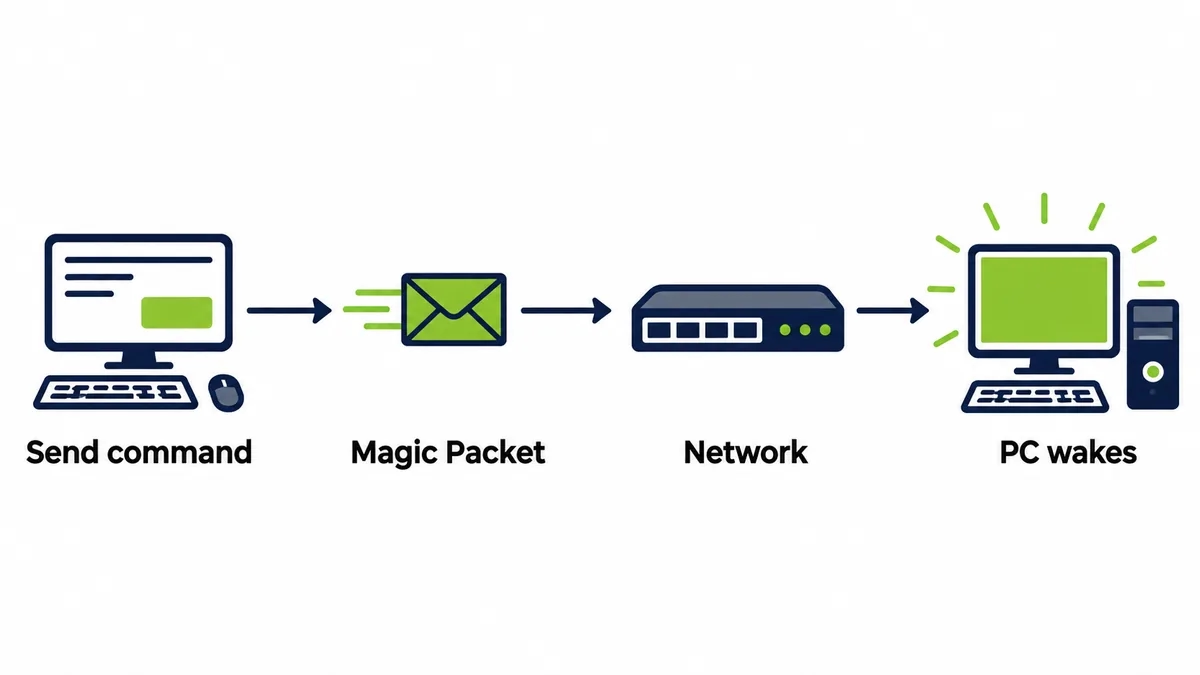
This is the gap a patented Wake-on-LAN Mesh closes, carrying the wake signal across subnets and complex networks without configuration changes and without weakening the segmentation that made the network secure. Security and power saving stop pulling against each other.
Why one blanket policy always fails
The tempting shortcut is a single rule for everyone. Shut every machine at seven in the evening, wake every machine at seven in the morning.
It survives about a month.
Then the operations centre that runs around the clock finds its screens dark at midnight. The department that opens at six loses its first hour every day. A team on a legal deadline finds machines asleep in the middle of the work. A blanket policy inside an organization with dozens of different schedules is not simpler than doing nothing. It is just wrong in more places at the same time. The answer is not a cleverer single rule. It is many precise ones, applied per department, which is the core of a real government IT energy management approach.
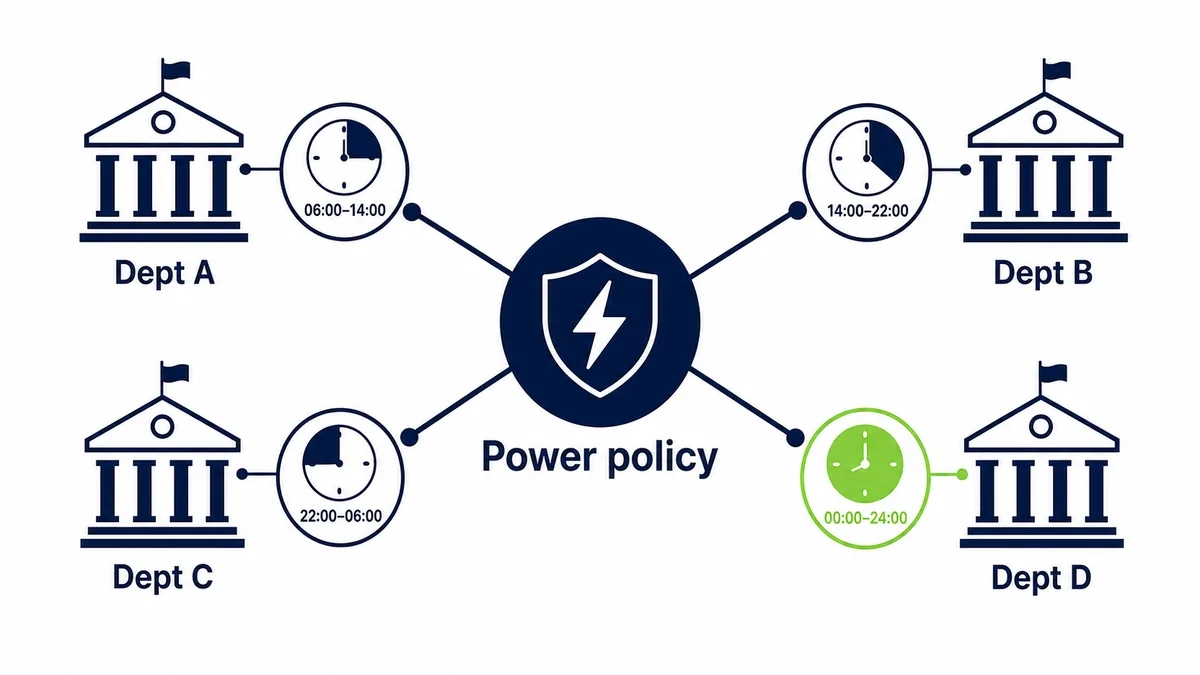
Power plans that match each department
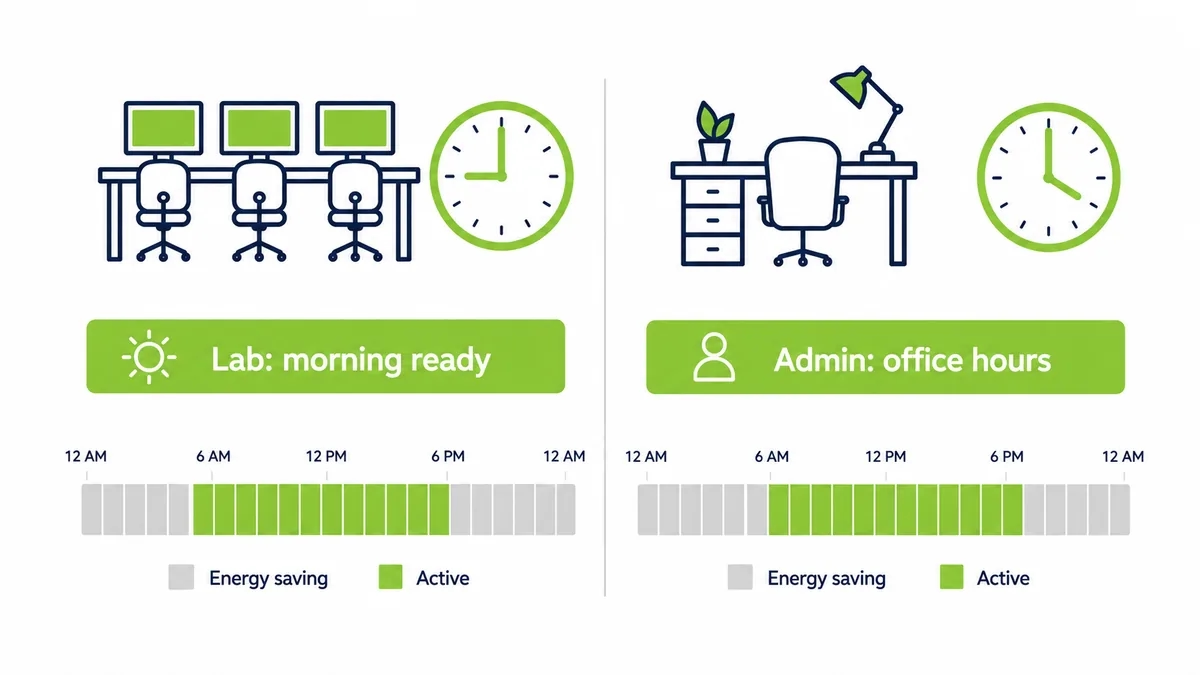
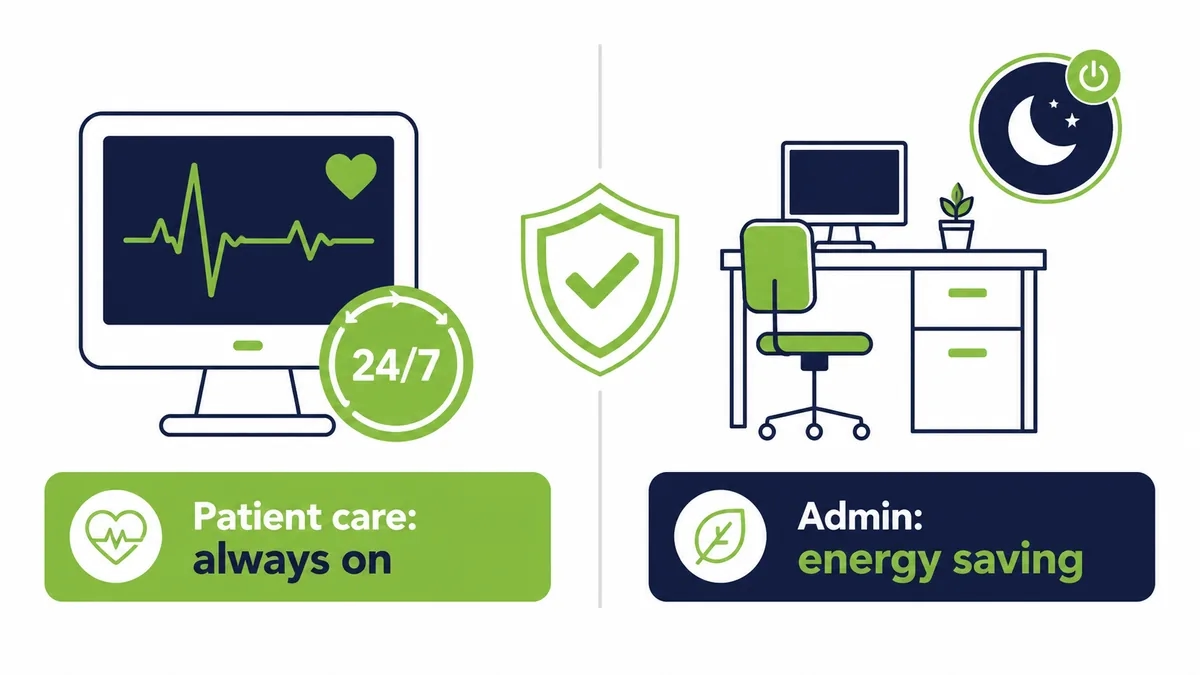
Customized power plans let each department run on a schedule tied to its genuine hours, so machines are fully powered only when the work actually happens. A licensing office and a 24-hour emergency operations centre should never share a policy, and with tailored plans they never have to.
The table below shows how one estate holds several schedules at once.
| Department type | Real operating pattern | Sensible power policy |
|---|---|---|
| Emergency operations | Around the clock | Always on, always reachable |
| Standard office | Roughly 8 to 6, weekdays | Wake before shift, sleep after hours |
| Shift-based service desk | Two shifts, no weekends | Wake per shift, off overnight and weekends |
| Seasonal or project team | Peaks, then quiet | Scheduled by period, off when idle |
The saving comes entirely from reclaimed idle time. Nobody’s working day is touched.
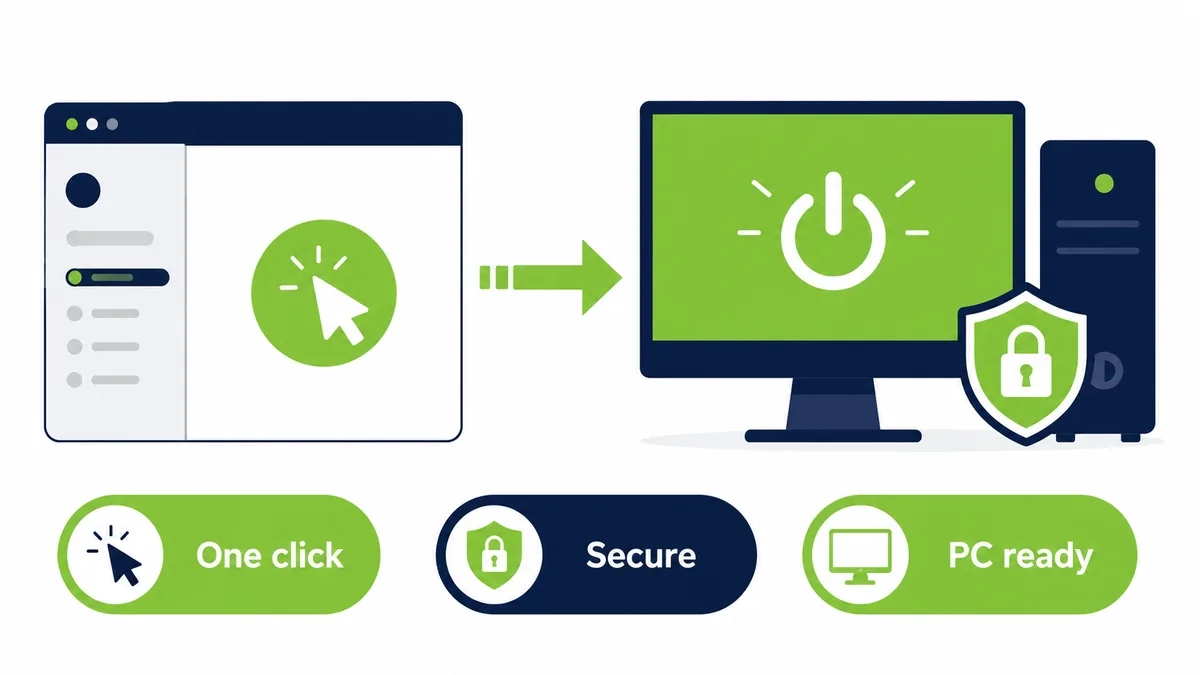
Availability without leaving the lights on
So how do you power machines down and still promise availability? You make waking them as dependable as switching them off.
Scheduled wake brings a department up ahead of its maintenance window, so updates and backups run without disrupting the day. When a specific machine is needed off-hours, a Wake-Up Portal brings it back with a single click, from home or a remote office, with no ticket and no technician walking a corridor. Consider a department of 300 machines on a fixed daytime schedule. Every one can be off by eight in the evening, yet any single one can be awake and reachable within seconds if an on-call officer needs it at midnight. Powering down stops meaning giving something up.
Where control and security actually live
For a public body, who can wake what, and the record of it, matters as much as the saving.
Wake schedules and permissions are configured and monitored from one place, access rights are set per user, and security protocols are enforced the same way every time. Powering down and disconnecting an unused machine also shrinks the surface an attacker can reach during the quiet hours, which is why power policy belongs in the same conversation as enterprise IT security rather than in opposition to it. The controls that make the saving safe are the same controls an auditor wants to see.
When the saving becomes a reportable number
There is a second reason this matters now, and it has nothing to do with the electricity bill.
Sustainability and disclosure rules increasingly require public bodies to account for the energy their own operations consume, and a fleet of PCs running all night used to be an invisible line. It is invisible no longer. Because the schedules and wake events are logged, the energy avoided is measured rather than guessed, which is exactly what frameworks like the CSRD expect an organization to be able to show. The reduction was always real. What changed is that it now counts on the record, next to every other operational figure the agency reports.
What government power management does not fix
It would be dishonest to promise this solves everything. It does not speed up an old machine, and it does not replace patch management or endpoint protection. What it does is let those systems work as intended, by making sure the machines are present when the tools reach for them.
It also does not switch itself on for free.
There is setup. You map the estate, define schedules that match each department, and confirm Wake-on-LAN is enabled across every site. The work is front-loaded and modest, and it is the reason the full return typically lands in under four months rather than on the first afternoon. Strip the detail away and the finding is plain. Idle machines cost public money, the only thing keeping them on was the fear of not getting them back, and that fear no longer has a basis.
Idle is not the same as saving
It is tempting to assume a machine left idle is almost free. It is not.
An idle desktop draws nearly as much as a working one, because the processor rests but the power supply, memory, and fans keep running. Sleep helps, yet a sleeping machine still has to be reachable, or it turns into a machine someone has to walk to. That is why “we let them idle overnight” and “we put them to sleep” so rarely describe a real saving. The saving only appears when a machine can drop to a genuinely low state and still wake the instant it is wanted.
The productivity cost that never reaches the bill
The electricity waste is the cost everyone eventually spots. It is not the biggest one.
When machines are off at two in the morning, the overnight patch cycle skips them, so updates land the next day while a caseworker waits. Deployment success rates fall, help-desk queues grow, and any machine that missed a security patch stays exposed a day longer than it should in an environment that holds sensitive public data. None of that shows up as a kilowatt-hour. All of it shows up as time, risk, and citizens waiting a little longer for a service. The energy number is the one you can see. The productivity number is often the larger of the two.
Run the maintenance math
Picture a monthly security update pushed to 4,000 agency desktops overnight. If 15 percent are switched off, 600 of them miss it and sit unpatched until someone logs in the next day.
Six hundred exposed machines, every cycle.
Now schedule those desktops to wake for the window instead. All 4,000 are awake at one in the morning, take the update in a quiet hour, and return to sleep before staff arrive. The patch reaches the whole estate, the compliance position improves, and nobody loses a morning to a forced reboot. The difference was never the patch itself. It was whether the machines were there to receive it.
What changes between fifty machines and fifty thousand
A single department forgives a lot. You can walk to the one machine that did not wake and press the button yourself.
An agency of fifty thousand forgives nothing.
At that scale, a wake method that works 95 percent of the time leaves 2,500 machines dark every morning, each one a person who cannot start or a patch that did not land. The manual workarounds that held a small office together stop scaling, because nobody has the hours to chase the exceptions. Scale does not make the problem bigger in a straight line. It changes what kind of problem it is, from a nuisance a team tolerates into a process that has to run without anyone tending it.
A saving you can defend in a budget meeting
Most cost cuts in the public sector carry a cost of their own. Fewer staff, slower service, a program trimmed.
This one does not.
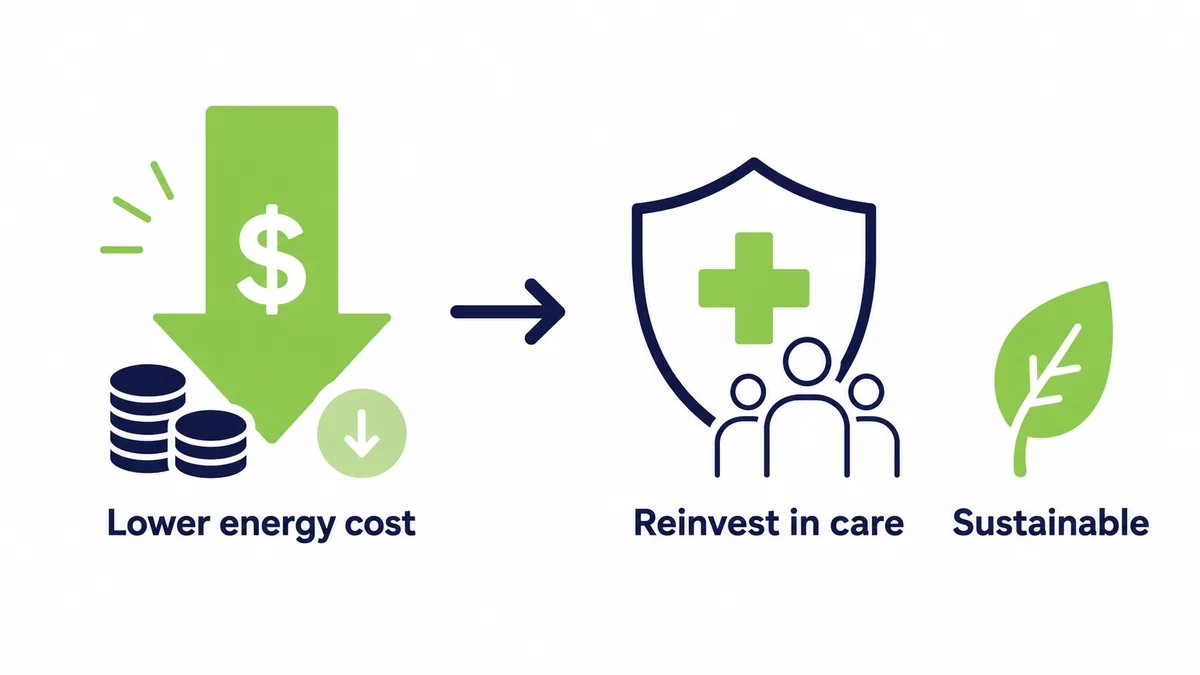
No post is lost, no service is reduced, and no citizen waits longer because a machine slept overnight while the building stood empty. That is a rare thing to be able to say in a budget meeting, and it is what makes idle-PC energy one of the easiest lines an agency can act on. The hard part was never the justification. It was having a way to power down that did not put availability at risk, and that part is now solved.
The quiet win for the IT team itself
There is a benefit that lands on the people running all this, and it goes past the budget.
Because wake schedules, permissions, and events are handled from one console, the daily overhead of a large fleet drops. Fewer desk visits to wake a machine, fewer tickets from remote staff who cannot reach their PC, and a clear record when someone asks who woke what and when. The team spends less time on the mechanics of access and more on the work that genuinely needs them, which in a stretched public IT department is a saving measured in hours as well as watts.
Where the largest agencies feel it first
The organizations that feel this most are the ones with the most machines and the longest hours.
Hospitals, universities, municipalities, tax and benefits offices, and national services all run large fleets that sit idle for long stretches, and all of them answer to a public that expects careful spending. For them the idle-PC line is not a rounding error. It is a recurring six or seven figure cost hiding in plain sight, and one of the few an agency can cut this quarter without a policy debate, a consultation, or a single reduced service.
The number that surprises the finance team
Finance rarely argues with this one, because the arithmetic is dull and unforgiving.
Put a modest figure on a single idle machine, then multiply by the fleet and the nights. An agency with 4,000 desktops wasting even a few dollars each in overnight power lands in six-figure territory within a year, before anyone counts weekends or holidays. There is no forecast to dispute and no assumption to challenge. The machines were on, nobody was using them, and the meter ran. That is usually the moment a power policy stops being an IT preference and becomes a budget decision.
Why now, and not five years ago
Agencies could have done this years ago. Two things changed that make it pressing now rather than optional.
The first is reliable cross-subnet wake, which removed the availability risk that always killed the idea. The second is disclosure. Public bodies are now asked to report the energy their operations use, so idle machines went from invisible waste to a line someone has to explain. The technology caught up and the accountability arrived at roughly the same time, which is why the overnight fleet is a question agencies are being made to answer today.
Frequently asked questions
See how much your organization could save
Tell us how many PCs you run and we will show you the realistic energy and cost savings, along with the payback period.

About the author
Nimrod Yedaya
VP Customer Experience
Over 15 years of experience in customer service, technical support, and customer relationships. Nimrod joined PowerPlug in 2012 as Customer Support Manager and was promoted to VP in 2016. He holds an MBA from BIU and a BSc in Communication Systems Engineering from BGU.